Agnes Doyle (1905-1992) From Nymagee to New York

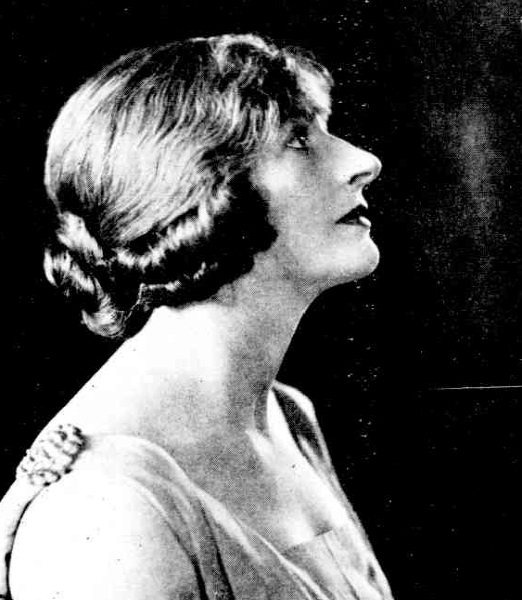
Agnes Doyle in November 1930 while performing in Sydney in Op O’ Me Thumb. Australian Performing Arts Collection, Arts Centre Melbourne.

The Five Second version
During her lifetime, Agnes Doyle found her way from a remote regional town in outback New South Wales to the New York stage. She was a popular favourite with audiences in Australia in the 1920s and early 1930s, and almost continuously in work. Like many of her contemporaries, she left Australia to “try her luck.” She enjoyed some success on the US stage, especially in a long tour of Yes My Darling Daughter, but it appears her career never took off, as had been expected. She appeared on US TV in the early days of live-to-air programming in the mid 1950s. Sometime in the late 1950s she took on an important role for JC Williamsons, the Australian theatrical company, acting as their agent in New York. In this role she negotiated contracts and royalty arrangements. She died in New Jersey in 1992.
Agnes in 1930 [1]The Bulletin 26 Nov 1930, P18

In remote Australia

Agnes Doyle was born in Nymagee, a remote copper mining town over 600 kilometres north-west of Sydney, in late December 1905. Her father Michael was a copper smelter, her mother Ada a local woman – Agnes being the third of three children. Unfortunately, deep unhappiness marred her childhood. When Agnes was very young, her parents went through a bitter separation and divorce. Custody of Agnes and her older siblings was granted to Michael, who moved the family to nearby Cobar – a much larger mining town, in 1917.[2]As with so many divorce documents of this time, a great deal was written but much remains unstated. See Divorce papers; Michael Doyle – Ada Doyle, 1912-1913, New South Wales State Archives The children all started performing even while living at Nymagee,[3]Cobar Herald (NSW) 9 December 1913, P13 but it was at Cobar that Agnes and older sister Annie shone as a young singers.[4]Western Age (NSW), 31 Jul 1917, P3 (See Note 1 below regarding her family circumstances)

Nymagee, New South Wales, with school students visible at left. Undated photo taken before 1917. Mitchell Library, State Library of New South Wales

On stage in Australia

Agnes’s first notable success on stage was as a dancer in Sydney in August 1926. With dance partner Jack Lyons, she went on to win at state and then in Australia-wide amateur dance competitions.[5]The Sun (Syd) 28 Nov 1926, P31. There is evidence that Agnes subsequently taught dancing at Melbourne’s Green Mill Dance Hall in the late 1920s. See Table Talk (Melb) 21 Mar 1929, P64 Unfortunately, where she learned to dance was never explained and what dramatic training she received is also unclear. But she had success on stage from a young age. In 1927 she was appearing in Leon Gordon‘s touring production of The Green Hat with Judith Anderson.[6]The Sun (Syd) 3 Jul 1927, P38 By early 1929, she was touring Australian towns, now in a leading role in The Patsy, with Bert Bailey.

Dancing partnership Jack Lyons and Agnes Doyle in 1926.[7]Sunday Times (Syd) 24 Oct 1926, P26

Interviewed while touring in The Patsy in Western Australia in April 1929, the twenty-four year old Agnes said exactly what might be expected of very young Australian actors of the era – “Of course, I’m dying to get to London, and I’m hoping to go in December… I adore the stage… and have always been anxious to take up that life.” And in language also so typical of the time, the Perth newspaper added: “Though her association with the stage has been comparatively brief, Miss Doyle has already made solid progress towards the top of the stage ladder, and there seems little doubt that her talents, so obvious to those who have already seen the show, [The Patsy] combined with her ambition… will carry her further.”[8]The Daily News (WA) 2 Apr 1929, P1 A Sydney Truth review of her role in the comedy This Thing Called Love in October 1930 was equally effusive. Her performance as the “inconsequential little idiot” Dolly Garrett, was “sheer joy”.[9]Truth (Syd) 12 Oct 1930, P7

Left: Agnes Doyle in Eliza Comes To Stay (1930) Photograph – Walker Studios. Australian Performing Arts Collection, Melbourne.
Right: Agnes Doyle and John Wood in Hayfever (1931) or While Parents Sleep (1932). The Marriner Theatre Archive, Melbourne.

The AusStage database entry for Agnes Doyle, which is not definitive, charts her busy schedule in the early 1930s, a reflection of her great popularity with Australian audiences. Her surviving JC Williamson contract also demonstrates how much “the Firm” valued her.[10]JC Williamson’s was the large theatrical firm that dominated Australasia In late 1933, the agreement was to pay her a working salary of £12 per week and then retain her on £4 per work when not working. It was generous pay for a woman in her late twenties. By comparison, the Australian minimum wage at the time was about £3 and 7 shillings.[11]Agnes Doyle contract with JC Williamsons. Dated 14 Dec 1933. Courtesy Australian Performing Arts Collection, Arts Centre Melbourne

Agnes in Ivor Novello’s Fresh Fields in 1934. She took the same role for its New York run in 1936.[12]Table Talk (Melb), 31 May 1934, P23

Her stage work brought her into contact with an eclectic mix of visiting and Australian performers, but notably there were a large number who would also try their luck overseas in the 1930s – John Wood and Campbell Copelin, Mona Barrie, Lois Green, Mary MacGregor, Dulcie Cherry and Isabel Mahon.

When The Patsy was revived again in 1932, Everyone’s magazine reported: “The play marks another individual success for Agnes Doyle… This girl is going [ahead] with leaps and bounds. She has a whimsicality and method of expression quite unusual, and in the part of Pat Harrington… [a] very quaint and also very appealing little personality…[13]Everyones, Vol.13 No.651, 24 August 1932, P36

Patricia Penman and Agnes in 1933. A Rene Pardon Studio photograph. [14]The Sun (Syd) 6 Sept 1933, P18

By this time, her personal life had already been “remade.” She was now reported to be the daughter of “a well known grazier” and her hometown was the respectable and well established town of Bathurst.[15]The Sydney Morning Herald, 18 Oct 1934, P8 While this was a fiction, she had made some important society connections. Possibly while at Cobar she had befriended Patricia Penman [16]Western Age (Dubbo, NSW) 23 Sep 1931, P2 a budding actress now using the stage name Tisha (or Tuisha) Guille and the daughter of sportsman, mining engineer and colourful Sydney personality Arthur Percival (Percy) Penman. When Patricia married Jack Harris in 1933, Agnes was the single bridesmaid.[17]Patricia lived a long life in New Zealand. Sir Jack Harris ran New Zealand import-export firm Bing Harris for many years

Perhaps her signature role was in Ivor Novello‘s comedy Fresh Fields. The play opened in Sydney in March 1934 after a long run in London. It probably appealed to Britons and Australians for different reasons. It concerned the Pidgeons, an Australian family, who had just sold their large hotel in Brisbane and who suddenly appear in the lives of two impoverished aristocratic London sisters (who cannot afford the upkeep on their Belgravia mansion). Agnes played Una Pidgeon, the “gauche clumsy” Australian daughter, who eventually wins over everyone and makes a success at court.[18]Ivor Novello Fresh Fields synopsis (1935) The theme of brash, wealthy, but unsophisticated Australians (or Americans) versus the reserve and genteel poverty of an English family has been repeated so often it is immediately familiar to us today.

Move to the United States in 1935

Agnes arrived in the US on the SS Monterey in July 1935. Intriguingly, on US immigration documents she gave Arthur Penman as her guardian in Australia, and actor John Wood (who was then under contract to RKO) as her contact in the US. In early 1936 she played the role of Una again with the Margaret Anglin company production of Fresh Fields in New York. Reviews for her performance were positive – although the play itself may have been “too English” for a long run in the US. Variety thought it “overwritten” and a bit “too gabby.”[19]Variety 12 Feb 1936 P62

Stories that she got the role while “on the way to London” may be true, but they also bear close similarity to accounts given for the US discoveries of other young Australians – Mary Maguire, Jocelyn Howarth (Constance Worth) and Mona Barrie – and it seems to have been a favourite Australian newspaper story. Another popular story was that of the movie studio offer. In Agnes’ case, following reports back home of the success of Fresh Fields on Broadway, came stories of studio contracts and movie offers in Hollywood.[20]Daily Telegraph (Syd) 23 April 1936, P14 Whether she ever really entertained working in film is unknown, but The Australian Women’s Weekly claimed that talks with Twentieth Century-Fox had broken down because she was “asking too much.”[21]The Australian Women’s Weekly 18 April 1936, P29

Agnes touring in Yes, My Darling Daughter in 1938.[22]Fort Worth Star-Telegram (Texas) · 24 Feb 1938, P11

Still presenting as a slight but vivacious young woman, she was well suited to playing the rebellious modern daughter in Yes, My Darling Daughter, first in New York in 1937 and then on tour through the US in 1938. It was a popular success.

The celebratory press reports of the 1930s regarding Australian actors overseas regularly included news of Agnes’s doings. Her travel to London in 1936 and again in 1938 when she stayed with Lord and Lady Waleran, news of being seen in the company of interesting people like Alfred Gwynne Vanderbilt, aviator Charles Kingsford-Smith and Hollywood newcomer Jocelyn Howarth (Constance Worth); all fitted in with the contemporary nationalistic belief that Australians could do anything.[23]The Sun (Syd) 25 Jan 1938, P11 But there was little news about work on stage.

Australian sojourn 1945-6

Newly returned home in March 1945, Agnes models a New York hat.[24]The Sun (Syd) 11 Mar 1945, P6

Unusually, Agnes Doyle returned to Australia in March 1945 – before the end of World War II, a difficult task and only possible at the time if one had guaranteed work at the destination and could get a berth on a ship. Yet Agnes did this and she stepped back into the Australian theatre scene with a role in the new comedy The Voice of the Turtle, with great ease. What had she been doing in New York for the previous six years was vaguely and briefly reported. When pressed, she spoke of her recent role in (a very short run of) That Old Devil.[25]The Daily Telegraph (Syd) 8 Mar 1945, P16 She also mentioned radio plays for the B.B.C. and a play for NBC’s TV channel. She explained that she had worked for the British Ministry of War Transport for 18 months and had also helped raise $200,000 for American War Loan Bonds.[26]The Sydney Morning Herald 8 Mar 1945, P5

Voice of the Turtle demonstrated that, whatever she had been doing, she had lost none of her skills as an actor. This contemporary adult comedy had a healthy two month run at Sydney’s Minerva Theatre and Agnes and Ron Randell, her co-star, were complimented for their performances.[27]The Sydney Morning Herald 10 Apr 1945, P5 This was followed by a short run of Shaw’s Arms and the Man at the Minerva.[28]The Daily Telegraph (Syd)13 Aug 1945
P16

Career in the US after 1946

It took until April 1946 for Agnes to get a passage back to the US, and during the interim she lived with the Penman family in Sydney again. She had time to socialise with friends, support events for the services and comment on Australia’s limited post-war opportunities for actors. [29]She also thought income taxes were too high. Daily Telegraph (Syd) 7 Jan 1946, P9 Like Ron Randell, she declined to take up a role in Flying Foxes, a play with an Australian theme written by US serviceman Warren D Cheney, that was very publicly proposed for a New York launch in early 1946.[30]See Daily Telegraph (Syd) 27 Jan 1946, P6. After US war service, Warren DeWitt Cheney, a maker of medical documentaries, went on to an interesting career as an abstract sculptor and later became a … Continue reading

One might wonder why Agnes Doyle, “Australia’s great little favourite,” returned to the US if her career there had slowed.[31]JC Williamson Whistling in the Dark program, August 1932. Via National Library of Australia PROMPT collection However, as this writer has noted before, the choice for post-war Australian performers was stark. Actors could either stay – meaning they would continue to work for JC Williamsons, or on radio, or perhaps in a rare Australian film – there was, as yet, no television. Alternatively, they could try their luck overseas – where the opportunities seemed boundless.

Unfortunately, it is difficult to trace all of Agnes’s professional activities in the post-war world. She appeared in several live plays for US television in the mid-1950s and occasionally wrote for newspapers. She was living in apartment hotels in the 1940s – the Royalton and Algonquin in New York, both well known for hosting actors seeking work. However, her luck changed at the end of the 1950s, when she took on a new and very high profile role. JC Williamson’s employed her as their New York representative, to negotiate contracts and complex royalty agreements – for example for the hugely successful musical Camelot. Some of these survive in the archives of the Australian Performing Arts Collection in Melbourne.

Agnes’s name on JC Williamsons letterhead, c1960. She continued in this role for at least ten years.[32]Australian Performing Arts Collection

Agnes Doyle became a US citizen in February 1958. By that time she lived at the Martha Washington Hotel, a women’s-only residential hotel in New York.

Agnes died at the Actor’s Fund Home in Englewood, New Jersey in August 1992. She never married, had no dependents and appears to have had no significant long-term partnership. A lonely life, perhaps. In 2024, the township of Nymagee still mines copper and sustains a population of about 100.

Another image of Agnes while performing in Op O’ Me Thumb in 1930. Mitchell Library, State Library of New South Wales.

Note 1 – Her family

There were great tragedies in Agnes’s life and these almost certainly coloured her willingness to discuss her past and probably influenced many of her decisions. In December 1920, her older sister Annie died in heartbreaking circumstances, apparently as a result of an attempt to induce an abortion.[33]Truth (Syd), 2 Jan 1921, P9 Annie also left behind a very young son, and the grief for the Doyle family was palpable.[34]The Daily Telegraph (Syd) 14 Dec 1920, P4[35]The Sydney Morning Herald 14 Dec 1920, P7 Twenty-two years later, in early 1942, Agnes’s brother Dennis died in fighting during the Japanese invasion of Malaysia and Singapore. He left behind a family. It appears that Agnes was estranged from her mother for much of her life. Not so her father, who as late as 1950 was proudly providing commentary on her life.[36]The Daily Mirror (Syd) 15 Feb 1950, P24 reported Patrick Doyle appearing on 2SM’s radio program “Fifty and Over”


Nick Murphy
March 2024

References

Special thanks

  • Claudia Funder – Australian Performing Arts Collection, Melbourne
  • Elaine Marriner – Marriner Theatre Archive, Melbourne

Collections

  • Australian Performing Arts Collection, Melbourne Australia
  • The Marriner Theatre Archive, Melbourne
  • New South Wales State Archives, Museums of History, New South Wales
  • State Library of New South Wales
  • State Library of Victoria
  • Births, Deaths & Marriages, New South Wales
  • Ancestry.com
  • Newspapers.com
  • National Library of Australia – Trove
  • National Library of New Zealand – Papers Past

Text

  • Warren D Cheney (1978) Don’t you play games with me!: How to identify and deal with games children play against you. Randolph-Harris, California.
  • John McCallum (1979) Life with Googie. Heinemann, London
  • Ivor Novello (1933) Fresh Fields: A comedy in Three Acts. (1936 Edition) Samuel French, New York.

Footnotes

Footnotes
1 The Bulletin 26 Nov 1930, P18
2 As with so many divorce documents of this time, a great deal was written but much remains unstated. See Divorce papers; Michael Doyle – Ada Doyle, 1912-1913, New South Wales State Archives
3 Cobar Herald (NSW) 9 December 1913, P13
4 Western Age (NSW), 31 Jul 1917, P3
5 The Sun (Syd) 28 Nov 1926, P31. There is evidence that Agnes subsequently taught dancing at Melbourne’s Green Mill Dance Hall in the late 1920s. See Table Talk (Melb) 21 Mar 1929, P64
6 The Sun (Syd) 3 Jul 1927, P38
7 Sunday Times (Syd) 24 Oct 1926, P26
8 The Daily News (WA) 2 Apr 1929, P1
9 Truth (Syd) 12 Oct 1930, P7
10 JC Williamson’s was the large theatrical firm that dominated Australasia
11 Agnes Doyle contract with JC Williamsons. Dated 14 Dec 1933. Courtesy Australian Performing Arts Collection, Arts Centre Melbourne
12 Table Talk (Melb), 31 May 1934, P23
13 Everyones, Vol.13 No.651, 24 August 1932, P36
14 The Sun (Syd) 6 Sept 1933, P18
15 The Sydney Morning Herald, 18 Oct 1934, P8
16 Western Age (Dubbo, NSW) 23 Sep 1931, P2
17 Patricia lived a long life in New Zealand. Sir Jack Harris ran New Zealand import-export firm Bing Harris for many years
18 Ivor Novello Fresh Fields synopsis (1935)
19 Variety 12 Feb 1936 P62
20 Daily Telegraph (Syd) 23 April 1936, P14
21 The Australian Women’s Weekly 18 April 1936, P29
22 Fort Worth Star-Telegram (Texas) · 24 Feb 1938, P11
23 The Sun (Syd) 25 Jan 1938, P11
24 The Sun (Syd) 11 Mar 1945, P6
25 The Daily Telegraph (Syd) 8 Mar 1945, P16
26 The Sydney Morning Herald 8 Mar 1945, P5
27 The Sydney Morning Herald 10 Apr 1945, P5
28 The Daily Telegraph (Syd)13 Aug 1945
P16
29 She also thought income taxes were too high. Daily Telegraph (Syd) 7 Jan 1946, P9
30 See Daily Telegraph (Syd) 27 Jan 1946, P6. After US war service, Warren DeWitt Cheney, a maker of medical documentaries, went on to an interesting career as an abstract sculptor and later became a psychologist
31 JC Williamson Whistling in the Dark program, August 1932. Via National Library of Australia PROMPT collection
32 Australian Performing Arts Collection
33 Truth (Syd), 2 Jan 1921, P9
34 The Daily Telegraph (Syd) 14 Dec 1920, P4
35 The Sydney Morning Herald 14 Dec 1920, P7
36 The Daily Mirror (Syd) 15 Feb 1950, P24 reported Patrick Doyle appearing on 2SM’s radio program “Fifty and Over”

Bringing “The Mikado” to the world – the amazing Salingers

“Tillie” (Matilda) Salinger (1866-1930) at the height of her fame c1895. [1]Undated public domain photo from the Internet Archive and California Revealed The background is a photograph of port city of Yokohama, taken in 1876, about ten years before Matilda, Herbert and Helena Salinger performed there. Note the mix of European and Japanese buildings.[2]Baron Raimund von Stillfried, 1839-1911, photographer. State Library of Victoria Picture Collections

The Five Second Version
Matilda, Herbert and Helena Salinger, the Australian-born children of a German gold rush immigrant to Australia, first appeared as juvenile performers on stage in Australia and by 1881 had joined Pollard’s Lilliputian Opera Company. The Pollards 1883 tour of South East Asia and India culminated in wild accusations of child kidnapping, and Mr Nathan Salinger actually travelled to Calcutta to reclaim his children. But instead of returning to Australia, they spent most of 1884-1888 performing to expat colonial audiences in India and Asia. It was their family troupe, the English Opera Bouffe Company, that first performed Gilbert and Sullivan’s The Mikado in Yokohama Japan, in April 1887 – albeit an edited version. By the early 1890s the Salingers had emigrated to the US, where they all pursued musical and theatrical careers, often together and with great success.
Lena” (Helena) and “Tillie” (Matilda) Salinger, soon after arriving in the US.[3]The World (New York) 18 Jan 1893, P9 and The San Francisco Call and Post, 14 Mar 1895, P6

Children of the goldfields

Matilda or “Tillie” (1866-1930), Herbert (1867-1922) and Helena or “Lena” (1869-1946) Salinger were the children of German gold-rush immigrant Nathan Salinger and his English born wife Elizabeth nee Glenister. All three children were born at the family hotel – the Freemason’s, in the gold-mining town of Ararat, in Western Victoria. By the early 1870s, the family had moved to run the Commercial Hotel at 113 Elizabeth Street Melbourne, in the city’s heart. Another son, Magnus, was born there in 1876.[4]Nathan placed newspaper notices to welcome each birth See Note 1 below regarding the Salinger family

The birthplace of the three older Salinger children – Barkly Street, Ararat.[5]Victoria and Its Metropolis, Past and Present. Vol IIA Country Districts, P203, 1888 McCarron Bird & Co, Melb

Joining the Pollards

The three older Salinger children attended the Melbourne Hebrew School, their names sometimes listed as prize winners in reports of the school’s annual awards.[6]The Argus (Melb) 19 March 1877, P7 We know little about the dynamics of the Salinger family, but we must assume that music and performance were valued and encouraged, because by 1880, Herbert and Tillie were appearing on stage at the Bijou Theatre in Melbourne for Lewis’s Juvenile Pinafore Company.[7]The Argus (Melb) 8 June 1880, P8 But not long after this, Herbert and Lena (aged 13 and 11 respectively) were signed up by Pollard’s Lilliputian Opera Company, touring Australia and New Zealand. As the following advertisement shows, the Pollards needed to supplement their troupe, as Pollard family members got older and no longer passed as children. To strengthen numbers they had also signed up other members of Lewis’s company – the Osmond children and “Little” Amy Brooks.[8]For reasons unknown, Tillie Salinger was not signed up with Pollards Their repertoire included HMS Pinafore and the comic opera Les Cloches de Corneville.

Herbert and Lena Salinger with the Pollard’s in 1881. As can be seen here, most of the performers were not Pollard family members.[9]The Lorgnette (Melb) 24 Dec 1881, P3

Amongst all the older Pollard managers (listed at the end of the 1881 Melbourne advertisement above) was a non-family member – Nathan Salinger – the troupe’s business manager. After his hotel ventures Nathan Salinger had turned his hand to other enterprises – including catering and furniture sales, and work for Pollard’s was another.[10]Years later, Tillie Salinger was understandably inclined to emphasise her father’s role as a theatre company manager rather than a publican. See The Philadelphia Inquirer 29 Dec 1918, P30 But this arrangement appears not to have lasted for very long, perhaps only while they performed in Melbourne.

Bewildered children and angry parents

Reviews of the Pollards were generally positive as they travelled through New Zealand and Australia, and over time the company added new operas. However, there were still challenges with finding available venues and fresh material to perform. By early 1883 the troupe was plodding its way through the provincial towns of northern Queensland, when the adult Pollards managing the troupe made a momentous decision. Attracted by accounts of the success some Australian theatre groups had enjoyed in South East Asia (then called “the Far East”) and India, the Pollards decided to try their luck there too.

14 year old Herbert Salinger in character as Gaspard in Pollard’s Les Cloches de Corneville, c 1881.[11]State Library of New South Wales, May Pollard collection of photos

They departed Queensland in June 1883 on the RMS Quetta, bound for Batavia and Singapore, “with thirty-five or so bewildered children” on board. “Bewildered” because, as historian Peter Downes notes, none of the parents or child performers had been consulted about leaving the Australian colonies and at least some accounts suggest the children did not know where they were going until they were at sea.[12]Downes (2002) P60-63 On the way, senior company members Tom and Charles Pollard wrote home to parents to inform them of their new plans. Charles Pollard’s letter to Eliza Salinger reveals the senior Pollards knew quite well the liberty they had taken in leaving Australia.

“Dear Mrs Salinger,
You will no doubt know before you receive this letter that the company are going to Calcutta for the Exhibition… [13]The Calcutta International Exhibition was held between December 1883 and March 1884 Of course you ought to have been informed, but it [the decision] was made so hurriedly that we…[had] no time to write… You have nothing to blame Herbert or Lena for, so you must blame me… [signed] C.A. Pollard”[14]The Times of India, Jan 24, 1884, P6


The children (those who were not Pollard family members) were indentured to the Pollards and their parents were paid an agreed salary, but there was nothing agreed about where they would perform. Even twenty years later, a surviving Pollards contract from 1900 for child actor W. S. Percy is remarkably unclear on this matter.[15]Downes (2002) P 212

13 year old Olive and 15 year old May Pollard were actually Pollard family members, as well as performers. But the Salingers, and most of the troupe were not. Photographed while in Singapore in 1883.[16]State Library of New South Wales, May Pollard collection of photos

By the end of 1883, with the troupe by now in India, Australian newspapers were reporting at length on accusations the Pollards had abducted or kidnapped the children.[17]See The Age (Melb) 17 Dec 1883, P6 Clearly some of the parents were enraged but most could do little about it. However, in December 1883, Nathan Salinger took passage for Calcutta to reclaim his children. The most reliable account of Salinger’s confrontation with the Pollards came via Joseph Bosisto, a colonial politician who was attending the Calcutta International Exhibition. He had been asked by the colonial government to meet the Pollards, check on the children’s welfare and insist on their return. Bosisto also attended court in Calcutta as an observer, when Salinger sought restitution for his expenses in collecting his children from the Pollards and returning to Melbourne.[18]See Bosisto’s statement to the Victorian parliament in The Argus (Melb) 20 June 1884, P6 Nathan Salinger was clearly a man of determination and financial resources, and the Pollards wisely settled out of court.

Calcutta as the Salingers may have seen it.[19]The Queen’s Empire, A Pictorial and Descriptive Record. (1899) P146, Cassell & Co Ltd. Photo Bourne & Shepherd, Calcutta

Under pressure from Bosisto, the Pollard troupe departed Calcutta in February 1884, bound for Australia, via performance stops in Rangoon, Penang and Singapore. They tried to negotiate a performance stop in Sydney, but Bosisto would have none of it. (See also Note 2 below)

Salinger’s English Opera Bouffe Company

Within a few months however, reports reached Australian papers that Nathan Salinger had not returned to Australia at all, but was settled in Calcutta, running a hotel[20]Tasmanian News, 27 Jun 1884, P3 and at least one of the Salinger girls was appearing in theatre there.[21]Weekly Times (Melb) 5 July 1884, P7 Although the Salinger’s footprints in India are faint today, surviving newspaper reports, show that by January 1885, Herbert and Lena were both performing with Emelie Melville’s touring company at Calcutta’s Corinthian theatre. Although an adult troupe, their repertoire included the very familiar popular operas that the Pollards favoured – Pirates of Penzance, H.M.S. Pinafore and the like. But within a few months, while in India, Melville’s company had collapsed over pay disputes.[22]Evening News (Syd)14 May 1885 P5 Ever one to seize an opportunity, Nathan Salinger set about establishing the English Opera Bouffe Company, utilising the skills of his four children (including his youngest, Magnus) and employing some of the former Melville company members.[23]Leader (Melb) 20 Feb 1886, P26

The English Grand Bouffe Company performing in Mumbai (then Bombay) in 1885. Tillie now used the stage name “Tilly Saroney.” [24]The Times of India 4 Nov 1885, P2

For the next few years the company of about 14 players performed seasons across India and South East Asia, and to Hong Kong and Shanghai. It was a small but consistently familiar group and included Arthur Rigby, Arthur Fawcett, Elsa Wilson and Frank d’Este. Arthur Fawcett wrote home to Australian papers on several occasions, including in July 1886 – from the refreshing climate of Murree, a hill station (now in Pakistan) where the troupe were about to perform Gilbert and Sullivan’s new opera The Mikado. He claimed the troupe had travelled over 11,000 miles by rail by this time, and played in nearly every garrison theatre and public hall in India – an impressive achievement.[25]Melbourne Punch 19 August 1886, P8

Interviewed years later, Lena recalled with some pride the family troupe entertaining distinguished Indian nobility and British officials, including at the wedding of the reformist Maharaja Gaekwad of Baroda to his second wife, in late 1885. But she also acknowledged that the troupe’s audiences were often at English outposts and military stations – bored soldiers must have been delighted to see them.[26]The Washington Post, 8 Oct, 1911, P3. Also contemporary accounts in Melbourne Punch (Melb) 19 August 1886, P8 and The Leader (Melb) 20 Feb 1886, P26 Their repertoire included the familiar favourites – Les Cloches de Corneville, The Little Duke, The Mikado, Pirates of Penzance and H.M.S. Pinafore.

Reviews of the small troupe varied – but the young Salingers were often singled out for praise. For example, the Shanghai North China Herald‘s review of Pirates of Penzance complemented Tillie for her “very attractive soprano voice… as good a light soprano as one could hope to hear in Shanghai, her voice is round and sweet” while “Lena Salinger is little less than a genius… so bright so full of vivacity… .” Herbert, “as Sergeant of Police was greeted with great applause, but he was quite cut out by …his corporal, Master Magnus.”[27]The North China Herald and Supreme Court & Consular Gazette (Shanghai) 16 Mar 1887, P300

The Salinger troupe performing the The Mikado in Shanghai in early 1887.[28]The China Mail (Shanghai) 8 Feb 1887.

Performing The Mikado in Japan

Gilbert and Sullivan’s comic opera The Mikado opened in England in March 1885 and was quickly a success. Today, modern audiences may find it dated and the characterisations offensive. Michael Cooper has described it as “one of the most passionately debated stage works of our time… A droll satire of Victorian England? A racist caricature of Japan? Some amalgam of the two?”[29]Michael Cooper, New York Times, Dec 25, 2016 Even in April 1887, the Salingers must have been aware they were taking a risk performing the play anywhere in Asia – but particularly in Japan, even though Yokohama, where it was to be performed, was a treaty port with numerous western merchants.


F.A. Sleap’s engraving of The Mikado at the Theatre Royal (Melb), in 1886.[30]The Illustrated Australian News. David Syme and Co. 1886. State Library of Victoria

It was Sir Francis Plunkett, the British representative in Tokyo, who insisted on changes to the play, including its title,[31]to Sotyugo Shita Sannin no Otome, roughly translated as Three Little Maids from School to avoid causing offence.[32]Lavery (2016) P224-225 It finally opened in Yokohama on April 30, 1887 and was repeated several days later, reportedly bringing in “more money than had six of any other work[s] in the company’s repertory.”[33]Civil and Military Gazette (Lahore) 16 Aug 1887, P6 Samuel L Leiter states that the Salinger troupe then repeated performances in Kobe and Nagasaki.[34]These cities were also treaty ports that allowed Western access to Japan While the choice of city to perform suggests Salinger wanted to present a new play that English-speaking expats had not yet seen, we are assured by Leiter that there were also Japanese in the audiences – although with the passage of time, their reactions seem unclear.[35]Leiter (2009) P128 Despite suggestions that the Salingers “wanted the distinction of singing the new Mikado… for the first time… in that country,”[36]The Boston Globe, 25 July 1895, P8 it would seem equally likely that Nathan Salinger’s decision to perform The Mikado in Japan was an entirely commercial one. Years later, Tillie Salinger recalled that Plunkett’s intervention had actually helped advertise the performance and improved audience numbers.[37]The San Francisco Call and Post 14 Mar 1895, P6

Following a performance season in Hong Kong in July 1887, the Salingers finally returned to Melbourne, Australia.[38]The Lorgnette(Melb) 29 June 1887, P2 They had run their travelling troupe for almost three years through India and the Far East.

In Australia, they were soon on stage again and touring familiar Australian towns. Rejoining the popular Emelie Melville again, they were listed as “Miss Tilly Sarony, the favorite soprano, Miss Lena Salinger, the imitable soubrette [and] Mr. Herbert Salinger, the versatile comedian.”[39]Euroa Advertiser (Vic.), 22 Jun 1888, P3 Although they were soon working independently of each other, they had re-established themselves as Australian stage favourites. Nathan Salinger now described himself as a Theatrical Agent.[40]See for example, Rate Book entry for 46 Brunswick St, Fitzroy in 1890 Inevitably, after several years back home, the young Salingers decided to try their luck in North America.

Lena as illustrated in a Melbourne paper in 1890.
[41]Sportsman (Melb) 15 Oct 1890, P5

A snapshot of three US careers

Tillie c1895.[42]Undated public domain photo from the Internet Archive and California Revealed

Tillie Salinger was the first of the family to depart for the United States. She boarded the RMS Alameda bound for San Francisco in October 1890 and was on stage with the Tivoli Opera House in San Francisco within weeks.[43]The San Francisco Chronicle, 24 Nov 1890, P8 Her reception proved to be a very positive one and this would have encouraged the rest of the family to follow. Only a few years later, the Music Editor for The San Francisco Chronicle, reported on her in these glowing terms: “Miss [Tillie] Salinger’s repertory is perhaps the largest of any singer, and her experience most unusually varied… Miss Salinger has a clear soprano voice of unusual volume and purity. It is powerful and well controlled... Miss Salinger is, therefore, entitled to serious consideration as a prima donna and many women have reached great prominence with far less genuine merit to recommend them.”[44]Peter Robinson in The Boston Globe, 25 July 1895, P8

Tillie and Phil, well established in 1909.[45]The San Francisco Call, 26 December 1909

Tillie remained associated with San Francisco’s Tivoli Opera for a decade, and married baritone Philip Branson, another Tivoli artist, in October 1893. The rest of the Salinger family emigrated to the US in mid 1891, with Lena also debuting at the Tivoli Opera that year. Thanks to Tillie’s talents and a life of continuous touring of the US, she became very well known. She was usually on stage in company with her husband Phil, in an endless stream of the ever popular light operas. As time went by Tillie and Phil were seen in supporting roles to newly rising stars – like Mitzi Hajos in 1911-12, and Australian Ivy Scott in 1917-18. Tillie and Phil punctuated this busy life with a short return to Australia in August – October 1900. She retired to Ridgefield Park, New Jersey in the early 1920s.

[Click on image to enlarge]
Left – Tillie and Phil Branson in the comic opera Robin Hood in 1914[46]The Missoulian (Montana) ·20 Jan 1914, P2
Centre – Three years later a revival of Robin Hood featured Tillie, Phil, and new Australian singer Ivy Scott[47]The Havre Daily News (Montana) · 19 Apr 1917, P4
Right – The musical Maytime in 1919 featured Phil and Tillie plus Herbert Salinger[48]Austin American-Statesman (Texas) 24 Dec 1919, P8

After a stint with the opera in San Francisco, Lena Salinger performed on tour with various companies throughout the US. Although inevitable comparisons with her older sister were made when she arrived, the view was that she was a mezzo soprano with “a voice of wide range and great power.”[49]Great Falls Tribune, (Montana) 3 May 1895, P4 Like her older sister, Lena appeared in a string of popular musical comedies – The Bohemian Girl, The Three Twins, La fille de Madame Angot and Telephone Girl. While touring with the Pike Opera Company in cities of the US north-west, she married fellow actor Harry R Hanlein (or Hanlon) – at the end of a performance, in Montana, in 1895.[50]San Francisco Chronicle, 23 May 1895,·P5 Like Tillie, she often toured with her husband, although as time went by, her roles were often supporting ones. After her marriage she usually styled herself Helena or Helen Salinger.

[Click on image to enlarge]
Left – Tillie, Helena and both husbands featured in this comic opera together in Chicago in 1896. [51]Chicago Tribune 29 Nov 1896, P37
Centre – Helena and Harry appeared together on tour in The Umpire [52]The Oshkosh Northwestern (Wisconsin) 25 Aug 1906, P3
Right – Helena Salinger Hanlon in 1911 about the time she appeared in the musical comedy Girl in the Taxi. [53]Signed photo dated 1911 from the Internet Archive and California Revealed

In April 1917 Helen was announced as part of the large cast being gathered for Sam Goldwyn’s forthcoming but as yet unnamed film.[54]Star-Gazette (New York) 4 April 1917, P2 After some speculation that it would feature popular actor Maxine Elliot, it ended up being called Polly of the Circus, and featured Mae Marsh and Vernon Steele. Helen’s role turned out to be a minor one.[55]The film survives and a low definition copy can be see here, at the Silent Hall of Fame Channel on Youtube Movies may have seemed an exciting change to a life of performance touring, but many actors at the time commented how professionally unrewarding film work was. For whatever reason, this appears to have been Lena’s only film. Performing increasingly in New York, she took supporting stage roles well into the 1930s.

While in St Louis in 1896, with the Al Fresco Opera Company, Herbert came to blows with a stage door johnnie, over their competing attentions to a chorus girl.[56]St. Louis Post-Dispatch, 25 Aug 1896, P5

Like his sisters, Herbert Salinger began his US stage career touring in musical theatre, and amongst his first performances were roles he knew well, such as the Sergeant of Police in Pirates of Penzance,[57]The Salt Lake Tribune, 7 May 1893, P7 and Ko-Ko from The Mikado.[58]The Buffalo Sunday Morning News, 23 Nov 1902, P6 Herbert is most commonly associated with the Manhattan Opera, which he managed and directed from about 1903. The Manhattan Opera also operated from the Rorick’s Glen Theater in the summer months. Well established in New York by 1902, he married fellow performer Odette Bordeaux in August.[59]Several years later, following the dissolution of their marriage, Odette was murdered apparently by one of her new husband’s trusted Prisoners. He was a Prison Warden Again, at times, Tillie, Helen and their husbands also performed at Rorick’s Glen.[60]Star-Gazette (New York) 19 May 1913, P6

A testament to the popularity of Gilbert & Sullivan. Performing The Mikado – again in 1905. [61]Star-Gazette (New York) 15 Aug 1905, P7

Herbert c1908.[62]The Buffalo Enquirer (New York) 24 Apr 1908, P2

After 1909, Herbert took to managing (and performing in minor roles in) touring productions, apparently working for New York’s Shubert brothers.[63]Star-Gazette (New York) 7 May 1921, P11 The musicals Princess Pat and Maytime were typical of the large scale productions taken on the road for prolonged tours. Herbert remarried in 1920, and turned some of his efforts to working the land. He took a part-interest in a property in Cody, Wyoming. Unfortunately he took ill and died there, aged only 55, in August 1922. The cause of death was given as peritonitis.[64]Star-Gazette (New York) 11 Aug 1922, P20

Herbert c1912 [65]Star-Gazette (New York) 5 Aug 1922, P2

Tillie Salinger also died relatively young, following a series of strokes, in New Jersey in 1930.[66]The Record (New Jersey), 2 June 1930, P2 Lena Salinger died at her home in Brooklyn, New York in October 1946.[67]New York, New York City Municipal Deaths, 1795-1949 database, via FamilySearch

The family’s youngest member – Magnus Salinger, having moved to the US with his parents in 1891, became a musician for the San Francisco Symphony, and was long active in the Musicians Union. His heart was soon in his newly adopted country – he became a US citizen and served in the US army in 1898-1899, during the Spanish American war. In late 1924 he returned to Australia with his wife and daughter, presumably to visit his cousins. He lived a long and successful life, dying in California in 1958, aged 82.[68]Daily Independent Journal (CA) 11 Dec 1958, P8


Note 1 – The Salinger family come to Australia

Tom Roberts’ vision of migration to Australia – Coming South (1886) National Gallery of Victoria.

Herz and Henriette Salinger brought their family from Germany to Australia in August 1858 during the Gold rushes. Nathan Salinger was their oldest son. The family were not typical of the great wave of migrants – who were often single men without family and mostly from the British Isles. By chance, the manifest for the ship Tornado has survived and shows the entire, mostly adult, Salinger family – of 5 daughters and 2 sons, travelling from Germany to Australia, via England. In Victoria, Herz and Henriette made their home at Pleasant Creek (Stawell) and later Ararat, major goldmining towns in Western Victoria.

Herz and his two sons Nathan and Emanuel may have tried mining, but records show the family soon moved into commerce – storekeeping, hotel keeping and later the local wine industry. Nathan’s brother Emanuel and his five sisters all stayed in Australia.


Note 2 – The Pollard Tour of 1880-1884

Peter Downes has documented the Pollards Lilliputian Opera Company tour of 1880-1884 at some length.[69]Chapters 6-9, Peter Downes (2002) While this tour established the practices of the later Pollards troupes, it could not have been regarded as a success at the time. Apart from the bad publicity surrounding the alleged “kidnapping” of children, in 1883 and 1884 it suffered several other serious blows. While in Rangoon, oldest son of the Pollard family Jim had shot himself[70]by accident or act of self harm, it no longer seems clear and family patriarch James Joseph Pollard, father to 18 children by two wives and owner of the Pollards, became seriously ill, diagnosed with dropsy,[71]probably heart failure at about the same time. He died soon after their return to Australia. As Downes notes, the company continued performing in Australia and New Zealand until they were disbanded in mid 1886. In 1891 a Pollard’s juvenile troupe was re-established by Tom Pollard.


References

Primary Sources

  • National Library of Australia, Trove
  • State Library of Victoria
  • State Library of New South Wales
  • Ancestry.com
  • Victoria, Births Deaths & Marriages
  • ProQuest Historical Newspapers
  • Newspapers.com
  • Hathitrust.com
  • The Internet Archive
  • Society of California Pioneers. Managed by California Revealed

Other links

  • Salinger’s Cafe at Great Western, North West of Ararat, was originally built by Nathan Salinger’s younger brother Emanuel in the 1860s as a store. It remained in the family until the 1940s. It continues to operate today as a restaurant and gourmet food-store, a quaint reminder of this pioneer family. See https://salingers.com.au/about/

Text

  • The Queen’s Empire, A Pictorial and Descriptive Record. (1899), Cassell & Co Ltd.
  • Michael Cooper (2016) “Reviving The Mikado in a Balancing Act of Taste” in The New York Times, December 25, 2016. Via Proquest newspapers
  • Peter Downes (2002) The Pollards. Steele Roberts, Wellington NZ.
  • James Jupp (2001) The Australian people: an encyclopedia of the nation, its people and their origins. Cambridge University Press
  • Joseph Lavery (2016) “The Mikado’s Queer Realism: Law, Genre, Knowledge.” Novel, A Forum on Fiction. Vol 49, No 2, August 2016, P291-235. Duke University Press
  • Josephine Lee (2010) The Japan of Pure Invention: Gilbert & Sullivan’s the Mikado. University of Minnesota Press.
  • Samuel L Leiter (2009) “Performing the Emperor’s New Clothes: The Mikado, The Tale of Genji and Lese Majeste on the Japanese Stage.” Rising from the Flames: The Rebirth of Theater in Occupied Japan, 1945-1952. (Ed) Samuel L Leiter. Lathan, Lexington Books, P125-171
  • Victoria and Its Metropolis, Past and Present. Vol IIA Country Districts, 1888. McCarron Bird & Co, Melb.

Australian Dictionary of Biography, National Centre of Biography, Australian National University

This site has been selected for archiving and preservation in the National Library of Australia’s Pandora archive

Footnotes

Footnotes
1 Undated public domain photo from the Internet Archive and California Revealed
2 Baron Raimund von Stillfried, 1839-1911, photographer. State Library of Victoria Picture Collections
3 The World (New York) 18 Jan 1893, P9 and The San Francisco Call and Post, 14 Mar 1895, P6
4 Nathan placed newspaper notices to welcome each birth
5 Victoria and Its Metropolis, Past and Present. Vol IIA Country Districts, P203, 1888 McCarron Bird & Co, Melb
6 The Argus (Melb) 19 March 1877, P7
7 The Argus (Melb) 8 June 1880, P8
8 For reasons unknown, Tillie Salinger was not signed up with Pollards
9 The Lorgnette (Melb) 24 Dec 1881, P3
10 Years later, Tillie Salinger was understandably inclined to emphasise her father’s role as a theatre company manager rather than a publican. See The Philadelphia Inquirer 29 Dec 1918, P30
11, 16 State Library of New South Wales, May Pollard collection of photos
12 Downes (2002) P60-63
13 The Calcutta International Exhibition was held between December 1883 and March 1884
14 The Times of India, Jan 24, 1884, P6
15 Downes (2002) P 212
17 See The Age (Melb) 17 Dec 1883, P6
18 See Bosisto’s statement to the Victorian parliament in The Argus (Melb) 20 June 1884, P6
19 The Queen’s Empire, A Pictorial and Descriptive Record. (1899) P146, Cassell & Co Ltd. Photo Bourne & Shepherd, Calcutta
20 Tasmanian News, 27 Jun 1884, P3
21 Weekly Times (Melb) 5 July 1884, P7
22 Evening News (Syd)14 May 1885 P5
23 Leader (Melb) 20 Feb 1886, P26
24 The Times of India 4 Nov 1885, P2
25 Melbourne Punch 19 August 1886, P8
26 The Washington Post, 8 Oct, 1911, P3. Also contemporary accounts in Melbourne Punch (Melb) 19 August 1886, P8 and The Leader (Melb) 20 Feb 1886, P26
27 The North China Herald and Supreme Court & Consular Gazette (Shanghai) 16 Mar 1887, P300
28 The China Mail (Shanghai) 8 Feb 1887.
29 Michael Cooper, New York Times, Dec 25, 2016
30 The Illustrated Australian News. David Syme and Co. 1886. State Library of Victoria
31 to Sotyugo Shita Sannin no Otome, roughly translated as Three Little Maids from School
32 Lavery (2016) P224-225
33 Civil and Military Gazette (Lahore) 16 Aug 1887, P6
34 These cities were also treaty ports that allowed Western access to Japan
35 Leiter (2009) P128
36 The Boston Globe, 25 July 1895, P8
37 The San Francisco Call and Post 14 Mar 1895, P6
38 The Lorgnette(Melb) 29 June 1887, P2
39 Euroa Advertiser (Vic.), 22 Jun 1888, P3
40 See for example, Rate Book entry for 46 Brunswick St, Fitzroy in 1890
41 Sportsman (Melb) 15 Oct 1890, P5
42 Undated public domain photo from the Internet Archive and California Revealed
43 The San Francisco Chronicle, 24 Nov 1890, P8
44 Peter Robinson in The Boston Globe, 25 July 1895, P8
45 The San Francisco Call, 26 December 1909
46 The Missoulian (Montana) ·20 Jan 1914, P2
47 The Havre Daily News (Montana) · 19 Apr 1917, P4
48 Austin American-Statesman (Texas) 24 Dec 1919, P8
49 Great Falls Tribune, (Montana) 3 May 1895, P4
50 San Francisco Chronicle, 23 May 1895,·P5
51 Chicago Tribune 29 Nov 1896, P37
52 The Oshkosh Northwestern (Wisconsin) 25 Aug 1906, P3
53 Signed photo dated 1911 from the Internet Archive and California Revealed
54 Star-Gazette (New York) 4 April 1917, P2
55 The film survives and a low definition copy can be see here, at the Silent Hall of Fame Channel on Youtube
56 St. Louis Post-Dispatch, 25 Aug 1896, P5
57 The Salt Lake Tribune, 7 May 1893, P7
58 The Buffalo Sunday Morning News, 23 Nov 1902, P6
59 Several years later, following the dissolution of their marriage, Odette was murdered apparently by one of her new husband’s trusted Prisoners. He was a Prison Warden
60 Star-Gazette (New York) 19 May 1913, P6
61 Star-Gazette (New York) 15 Aug 1905, P7
62 The Buffalo Enquirer (New York) 24 Apr 1908, P2
63 Star-Gazette (New York) 7 May 1921, P11
64 Star-Gazette (New York) 11 Aug 1922, P20
65 Star-Gazette (New York) 5 Aug 1922, P2
66 The Record (New Jersey), 2 June 1930, P2
67 New York, New York City Municipal Deaths, 1795-1949 database, via FamilySearch
68 Daily Independent Journal (CA) 11 Dec 1958, P8
69 Chapters 6-9, Peter Downes (2002)
70 by accident or act of self harm, it no longer seems clear
71 probably heart failure

Celebrity recipes from Australia

The sad looking roast Wallaby shown above, is recipe No 2858, from the Australian supplement in Mrs Beeton’s Book of Household Management, 1890 edition. Ward, Lock and Co. (For a similar unappetising recipe, see Parrot Pie, below)

The following recipes appeared in Australian publications between 1890 and 1976. I have come across these over the last few years of reading vintage Australian papers etc, and felt in the spirit of Christmas cheer, I should share them.

Nick Murphy, December 2023


Pacific Grill, 1976, Dame Edna Everage

Dame Edna in The Australia Women’s Weekly, 29 April 1981, P43

AUTHOR’S COMMENT
I know someone who made this. It was for a Australian house party to celebrate Charles and Diana’s wedding in July 1981. Of course it was really just another excuse to get stuck into internationally-acclaimed, award-winning Australian wine.

INGREDIENTS
6 lovely plump pork sausages; Dripping; 6 large mushrooms; 6 golden slices of freshly tinned pineapple; Tomatoes, halved; salt and pepper to taste

METHOD & RECIPE
Fry up saussies in a little fat until browned all over (turn well to avoid those horrid grey tummies). Removed from fat keeping them nice and hot somewhere. In the same dripping (already flecked with deliciously crisp sausage oozings) fry the pineapple rungs on both sides until cooked through and soggy. Drain on kitchen paper and keep hot while you sizzle up the peeled mushrooms and tomatoes, adding a dollop of extra fat if necessary, but be careful they do not break. Thrust each hot plump sausage cheekily through the hole in each pineapple slice and garnish with halved tomatoes seasoned with salt and pepper. A spicy tomato sauce is optional. [1]Source: Dame Edna Everage/Barry Humphries (1976) Dame Edna’s Coffee Table Book. P76. Australasian Publishing Company


Baked Meat Ring, 1956, anon

AUTHOR’S COMMENT
In my Australian childhood, the importance of eating copious amounts of meat was taken for granted.
But why you would go to the bother of doing this, I can’t imagine.

ORIGINAL COMMENT
Here’s a hearty main-course dish – and no one would dream it’s made from “left-over” meat… A savoury treat :

INGREDIENTS:

1lb minced left-over meat; 1/2 cup milk; 1 minced onion; 1 dessertspoon Bonox; 1 egg; 1 cup breadcrumbs; 2 tablespoons chopped parsley; 2 finely chopped mint leaves; 1/4 teaspoon salt; pepper.

METHOD & RECIPE
Combine all the ingredients and mix thoroughly. Grease a small ring mould or loaf tin and pack the mixture into it. Bake in a moderate oven (350° F) for one hour. Turn out and serve with tomato sauce, and vegetables in season.[2]The Australian Women’s Weekly 25 Jan 1956, P36


Rabbit in aspic, 1946, Gwenda Wilson

Gwenda Wilson c1945. Australian Performing Arts Collection, Melbourne Australia.

AUTHOR’S COMMENT
Long before she became famous on BBC radio’s The Archers, Gwenda Wilson was making this
dish for guests in Australia.

ORIGINAL COMMENT
With nightly performances, matinees, and rehearsals, the Don Sharp’s (Gwenda’s husband) naturally have little time for entertaining, but they love having people in for Sunday night supper. Here are some of the dishes Gwenda serves her guests on such occasions…

METHOD & RECIPE
One rabbit, cut up and cooked with enough water to cover. Add few bacon rashers and small chopped onion. Season to taste. When cooked remove all bones. Measure liquid and dissolve 1 dessertspoon gelatine, 1 cup liquid. Place hard-boiled eggs and green peas around inside mould, then arrange cooked rabbit and pour over liquid, and leave to set. Turn out and garnish with parsley or chopped mint.” [3]The Argus (Melb) 8 Jan 1946 P8


Recipe for hair dye, 1940, Nancye Stewart
[Do not eat this – it is a home-made hair dye]

Nanyce Stewart, c1930. Australian Performing Arts Collection, Melbourne Australia.

AUTHOR’S COMMENT
This definitely belongs to the era when one made things rather than buying them, no matter how time consuming. Why a well known actor would spend time preparing this mixture rather than buying something off the shelf is unknown.

ORIGINAL COMMENT
Miss Nancye Stewart, well-known actress, tells how to darken grey hair with a simple home-made mixture. The Australian actress—whose artistry has won her many prominent theatrical roles gives the following advice on grey hair and how to darken it.

METHOD & RECIPE
FOR HAIR DYE
Anyone can prepare a simple mixture at home that will darken grey hair and make it soft and glossy. To a half-pint of water add one ounce of Bay Rum, a quarter ounce box of Orlex Compound, and 1 ounce Glycerine. These ingredients can be bought at any chemist’s at very little cost. Apply to the hair twice a week until the required shade is obtained. This should make a grey-haired person appear 10 to 20 years younger. It does not discolor the scalp, is not sticky or greasy, and does not rub off. [4]The Advertiser (Adel) 12 Sep 1940 P6


Eggs pickled in beetroot sauce, 1935, Elissa Landi

AUTHOR’S COMMENT
Another time consuming recipe – in this case for colouring hard boiled eggs, so they look a “gay shade of red.”
This is typical of celebrity recipes from Hollywood wheeled out by Australian papers at the time. Landi’s Hollywood career came to an end at about this time, after she refused a role.

ORIGINAL COMMENT
This is a dish particularly suitable for our climate. For the outdoor buffet luncheon, one of my pet recipes, says Elissa Landi, is for eggs pickled in beet juice.

METHOD & RECIPE
Boil about a dozen carefully scrubbed beets in a kettle of suited water. Pour off the liquid and cool. Have ready the desired number of cold hard-boiled eggs, and, after removing the shells, drop them in the cold beet water. Add a tablespoonful of vinegar several bay leaves, and some slices of onion. Let the eggs soak in this mixture, in the icebox, about 12 hours.

Then remove, allow to drain, and serve on crisp lettuce leaves. They should be a gay shade of red, and will taste as good as they look. [5]The Herald (Melb) 3 Oct 1935, P36


Fried Fish a la Russe, c 1931, Lupe Velez

AUTHOR’S COMMENT
Another recipe very much of its era – fried fish with a lot of cream, butter and fat.
Australian newspapers were likely given such tidbits on up and coming stars by US studios and Velez did not visit the country. Velez did work with Australian Leon Errol in the Mexican Spitfire series. The author finds it hard to believe she ate this very often, if at all.

ORIGINAL COMMENT
Lupe Velez, the fascinating talkie star, is an enthusiastic cook, and likes trying out new recipes. Here are some which she got from a celebrated New York chef. She made them for some of her friends, and she declares they were pronounced excellent. 

METHOD & RECIPE
Take two large slices of any large fish. Cut fillets, saving the skin and bones. Sprinkle fillets with pepper and salt, and pour over them one-third of a cup of white cooking wine.

Cover, and let stand thirty minutes. Drain and dip each piece separately in heavy cream, then in flour, and fry in deep fat.

Cook the skin and bones removed from fish with five slices of carrot, two slices of onion, a sprig of parsley, a bit of bay leaf, a few peppercorns, and two cups of cold water, until reduced to one cup of liquid.

Make a sauce of two tablespoons full of butter, three tablespoons full of flour, the fish stock, one-third of a cup of heavy cream, adding the yolks of two eggs, a dash of pepper and salt, and white wine to taste.

Arrange fish on a serving dish. Cover fish with a half-pound of sauteed mushrooms, and pour the sauce over it.[6]Table Talk (Melb) 9 Jul 1931 P32


The Candle Salad, c1930, Eileen Robinson

Eileen (Right) in her one film with Clara Kimball Young in 1920. Courtesy Margaret Leask

AUTHOR’S COMMENT
Eileen Robinson worked for several extended periods in the US. Unusual though it is, I tend to the view this recipe is real. The French dressing may have been a novelty in Australia at the time.

ORIGINAL COMMENT
From her extensive collection of recipes, gathered during world travels, Miss Eileen Robinson, of the Theatre Royal, supplies the following tasty dish, one which is exceedingly popular at luncheons in America. It is simple to prepare, and amply repays the trouble of making it.

METHOD & RECIPE
For each person allow a slice of pineapple and half a banana. Pare down the banana on the crooked side so that it will be straight and look like a candle. Set each section of banana into the hole in the pineapple, and place a maraschino cherry on top to represent the flame, pouring over a little paprika French dressing. Drain for a few moments, and then arrange individually on salad plates, with a garnish of lettuce.

To make the paprika French dressing take 6 tablespoons of pure olive oil, 2 tablespoons of vinegar or lemon juice, 1 teaspoonful of salt, ¼ teaspoonful of pepper, ½ teaspoonful of paprika. Pour the oil and vinegar (or lemon) into a bowl, add the dry ingredients, and beat with an egg beater until thoroughly mixed. Then serve as recommended.[7]Sunday Mail (Bris) 2 Feb 1930, P18


Parrot Pie, c1890, Mrs Beaton

AUTHOR’S COMMENT
The idea of eating Parakeets or Budgerigars in a pie stretches the imagination. They are quite small and mostly comprised of beak, feather and bone.
Still, the recipe was being prepared in England and possibly Mrs Beeton’s publishers were unclear about what a Parakeet was. (Mrs Beeton had died in 1865 but her publisher maintained the rights to use her name for many years)

INGREDIENTS
1 dozen paraqueets, a few slices of (underdone cold beef is best for this purpose), 4 rashers of bacon, 3 hard-boiled eggs, minced parsley and lemon peel, pepper and salt, stock, puff-paste.

RECIPE & METHOD
Line a pie dish with the beef cut into slices, over them place 6 of the paraqueets, dredge with flour, fill up the spaces with the egg cut in slices and scatter over the seasoning. Next put the bacon, cut in small strips, then 6 paraqueets and fill up with the beef, seasoning all well. Pour in stock or water to nearly fill the dish, cover with puff-paste and bake for one hour. Time- 1 hour. Sufficient for 5 or 6 persons. Seasonable at any time.[8]Mrs Beeton’s Book of Household Management, 1890. Ward, Lock and Co. P1259-1260

This site has been selected for preservation in the National Library of Australia’s Pandora archive

Footnotes

Footnotes
1 Source: Dame Edna Everage/Barry Humphries (1976) Dame Edna’s Coffee Table Book. P76. Australasian Publishing Company
2 The Australian Women’s Weekly 25 Jan 1956, P36
3 The Argus (Melb) 8 Jan 1946 P8
4 The Advertiser (Adel) 12 Sep 1940 P6
5 The Herald (Melb) 3 Oct 1935, P36
6 Table Talk (Melb) 9 Jul 1931 P32
7 Sunday Mail (Bris) 2 Feb 1930, P18
8 Mrs Beeton’s Book of Household Management, 1890. Ward, Lock and Co. P1259-1260

Eileen Robinson – Bright reports & close friends from the USA

Eileen Robinson by Hollywood photographer Max Munn Autrey, c1935. The ‘bright reports’ of Eileen’s early US successes came about courtesy of letters she sent home to her father in Sydney in 1921. Photo courtesy Margaret Leask.

The Five Second Version
The only daughter of Sydney publisher Herbert E.C. Robinson (1857-1933) and Augusta Dahlquist (1862-1914), Eileen was “a young actress with an exceptionally charming personality across the footlights” reported one newspaper after her first professional appearance in 1914.[1]Sunday Times (Sydney)19 Apr 1914 P22 Great success was predicted for her. In 1919 she went to the US, where her older brother Cecil Robinson (aka Ashley Cooper) and niece (Dulcie Cooper) had been performing for more than a decade. She again earned good reviews, but extended returns to visit and perform in Australia every few years meant it was difficult for her to build career momentum in the US.
Her close friend and professional collaborator for a decade, US actress Theresa Carmo,(1906-1990) worked with her in the US and joined her on two extended Australian trips – in 1929-1931 and 1935-1936. Their collaboration included scripting and performing original material for the stage and on radio.
In 1923 she bore a daughter, Peggy, to US actor Alan Brooks (Irving Hayward) (1888 – 1936), but their marriage was short- lived. She died in Sydney in 1955.

Eileen Robinson in an undated photo, most likely from her performances in John Ferguson in San Francisco in 1921. (Enlarged) Courtesy Margaret Leask

At the time of her travel overseas in 1919, Eileen Robinson was spoken of as one of the new generation of successful Australian actresses. She was a direct contemporary of Sylvia Breamer(1897-1943), Dorothy Cumming (1894-1983) and a friend of Judith Anderson(1897-1992), all of whom would make successful careers in the United States. As Andree Wright has noted, “At the time, [these film success] stories convinced readers that ‘with very few exceptions, every Australian who ha[d] ever gone to America ha[d] succeeded beyond expectations.[2]Andrée Wright (1986) Pps18-19. The inserted quote is from Picture Show, 2 August 1919

Eileen, aged about 25, in 1921,[3]The Triad (Aust) 10 June 1921, P24. Photo has been filtered

Born Eola Eileen Trilby Robinson in Sydney in October 1896, to Herbert Robinson (or “HEC” as he was known – after his initials), a well known map maker and publisher, and his wife Augusta nee Dahlquist.[4]The Daily Telegraph (Syd) 30 Oct 1896, P1 Eileen’s schooling was at Astraea College in Chatswood.[5]Sydney Morning Herald, 26 Nov 1941, P9 While she was still young, her much older brother Cecil (born 1880) threw in his career as a draftsman in Sydney to pursue the stage. In 1905, Cecil [6]later using the name Herbert Robinson and then Ashley Cooper took his young family to the US, spending some years establishing himself.

While a career on the stage continued to be viewed with some suspicion in many Australian homes, it clearly had great credibility in this family. Both Augusta and HEC Robinson were friends of actress Nellie Stewart and Eileen became a good friend of Nellie’s daughter Nancye. Eileen was also known within the family as “Trilby,” a name found in the novel and play popular at the time of her birth.

Company letterhead for HEC Robinson Ltd, showing the address in central Sydney in the 1930s. Courtesy Margaret Leask

By 1912, Eileen was attending classes with well known actor Walter Bentley – later moving to Douglas Ancelon and Stella Chapman’s dramatic school. [7]Daily Telegraph (Syd) 28 March 1914, P14 As Desley Deacon has noted, in the early twentieth century, such acting and elocution schools served a much broader purpose than just knocking off vestiges of a colonial accent. It also taught girls marketable skills and instilled discipline.[8]See Deacon (2013)

In September 1919, Walter Bentley (1849-1927) reminded Sydney readers that Eileen had been one of his successful students, along with Sylvia Bremer and Dorothy Cumming. [9]Freeman’s Journal (Syd) 27 Sept 1919, P1

Eileen’s first professional outings were in productions at Sydney’s Little Theatre, in The Gay Lord Quex in April 1914, followed by a short season in George Bernard Shaw’s Fanny’s First Play. The latter was “her first important role, (where she) scored a decided success. She hit off the Cockney mannerisms very well indeed, and gave the character the required note of impudent familiarity.”[10]The Daily Telegraph (Syd), 12 May 1914, P14

Eileen in a Marie Tempest comedy, in Melbourne in November 1917. Cast members Gwen Burroughs and Nancye Stewart both tried their luck overseas.[11]State Library of Victoria

Eileen’s first contract with JC Williamson’s was for a 1916 revival of the very popular Get Rich Quick Wallingford, on £5 per week – a modest salary but still more than twice the Australian “minimum wage” of the time. [12]JC Williamson’s contracts, Australian Performing Arts Collection, Melbourne By the end of World War 1, she had almost three years of strong stage experiences performing in Australia under her belt, including tours with visiting actors like Marie Tempest (1864-1942) and Margaret Wycherly (1881-1956). Like so many of her contemporaries at this time, Eileen embarked for the US in early 1919. She travelled with Nancye Stewart – the adventure being described as a “six month holiday.”[13]See The Daily News (WA)1 Mar 1919, P3

Like many young Australian actresses, 18 year old Eileen was paid to advertise cosmetics.[14]The Bulletin (Aust) 26 Nov 1914, P45

In later years there were oblique references to how hard it was to establish herself.[15]The Sun (Syd) 7 Aug 1921, P17 However, in early 1920 she was offered a small role on Broadway in Trimmed in Scarlet, with Maxine Elliott. The New York Tribune dismissed it as the “silliest play of the season”, which may explain its short run.[16]New York Tribune, 3 Feb 1920, P11 Enthusiastic Australian newspaper reports claimed she appeared in films for Famous Players–Lasky, a claim now difficult to verify, but she is known to have found a supporting role in Mid-Channel, a film with popular cinema actor Clara Kimball Young(1890-1960).[17]Sydney Mail, 4 Aug 1920, P13 By extraordinary chance, this film has survived.[18]It can be seen here

Clara Kimball Young and Eileen Robinson in Mid-Channel (1920) Eileen Robinson has marked herself “me!” under the photo. Most online sources incorrectly credit her as playing Mrs Pierpoint, rather than the daughter Ethel Pierpoint. Photo courtesy Margaret Leask.

There was a brief mention in one Australian magazine that although she enjoyed the novelty of “picture acting”, she preferred the legitimate stage.[19]Everyone’s.(Aust) 10 August 1921, P5 Her one outing in film was rarely mentioned again.

However, it was Eileen’s work in the the play John Ferguson, first at San Francisco’s Columbia Theatre in early 1921 and then on tour, that brought her greatest acknowledgement.[20]6 weeks of touring is mentioned in Variety, March 11, 1921, P28 An oft-cited review in the San Francisco Call reported “Eileen Robinson, young, beautiful, clever, plays the role of Hannah, daughter of John Ferguson. All eyes are turned on her the moment she enters the stage. Her voice contains that undefined something that attracts respectful attention. She is a most finished actress. In her principal scene her interpretation of her part is such that when the tenseness of the moment was over the audience broke into the most enthusiastic applause of the evening. Miss Robinson scored every moment during the rest of the play.”[21]San Francisco Call, 1 February 1921, P4

Eileen’s father passed this and similar wonderful reviews on to the Sydney papers. Also of interest to Australians was the fact that well-known Queensland actor, Tempe Pigott, was in the John Ferguson cast. Eileen wrote to her father that she was “having a glorious time” and was “enjoying herself immensely.”[22]The Daily Telegraph (Syd) 21 May 1921 P8 She ended her US experience with a series of performances at the Denham Theatre in Colorado. By August 1921, she was back in Sydney.

Almost immediately she went on stage with comedian Bert Gilbert, touring on the Tivoli circuit. At the same time she reassured journalists that she would soon return to the US. This seems to have been because, while in the US, she had met US writer and actor Alan Brooks (Irving Hayward) and the couple apparently sustained a long distance relationship for more than six months.[23]The Daily Mail (Qld) 4 Mar 1922, P11, mentions she will soon marry She departed Australia again, in April 1922, taking the SS Osterley, bound straight for Southampton, England, because Brooks was now presenting his own play Dollars and Sense throughout Britain. Eileen joined him onstage on tour, and the couple married in Paddington in January 1923.

By June 1923, she was back in Australia yet again, with Brooks, and despite being pregnant, she appeared with him on the Tivoli circuit for the opening weeks of an Australian season of Dollars and Sense. Newspapers reported he was “very proud” of his wife. Eileen was “splendid” he told Australians.[24]The Sun (Syd) 9 Jun 1923, P6 A daughter, Peggy, was born of the union in Sydney in July 1923. Several months later, they departed for the US- first Brooks, followed a few months later by Eileen and baby Peggy.

Eileen reappeared on the US stage in San Francisco in early 1926, in the comedy A Man’s Man. Sometime in 1926 or 1927 she met Theresa Carmo, an actress about ten years her junior, who was making a name for herself in ingenue roles. As subsequent events show, the two became trusted friends.

Eileen on stage with Lowell Sherman (1888-1934) in Los Angeles in 1928 [25]The Los Angeles Times, 15 Jul 1928, P44

In early 1929, Eileen and Theresa were on stage together in the comedy One Wild Night at Los Angeles’ Theater Mart, when they decided to pack up and move to Australia. We don’t know the context or exact reason for this dramatic move – perhaps Eileen wanted to see her father again, or perhaps they thought the depression would be easier to manage in Australia.[26]It wasn’t, although Carmo did tell one Australian paper that conditions were very bad in the US. See Truth (Bris), 12 Jan 1930 P25 Eileen’s marriage to Alan Brooks had come to an end by this time.[27]The Los Angeles Times 15 Jul 1928, P44 (See Note 1 below)

To the left of the ANZ Bank was the home of HEC Robinson Map publishers at 221 George Street, Sydney. The Robinson’s rooftop apartment can be made out. Eileen lived here with her father, daughter and Theresa Carmo in 1929-1931 [28]Daily Pictorial (Syd) 8 Feb 1931, P19 and again in 1935. Photograph dated 1963. Copyright City of Sydney, Archives & History Resources

Within a few weeks of arriving in Australia in August 1929, Eileen and Theresa were on stage at Sydney’s Tivoli, in a sketch they had written themselves, You’re Another. Eileen’s father escorted Nellie Stewart to watch the show from a box. Eileen announced that she was “tickled to bits! I’ve got lots of flowers and bottles of champagne… America is a dry country!” [29]This was a reference to Prohibition in the US. Daily Telegraph (Syd) 20 Aug 1929, P5 Eileen and Theresa’s US acting credentials meant that they were welcomed and feted by the city’s society and theatrical leaders. For radio, Theresa sang – occasionally in other languages, accompanying herself on the ukulele.[30]The Wireless Weekly, 27 Sept 1929, P54 For the press, Eileen provided recipes from the US and entertaining stories of Hollywood – including a lengthy description of Marion Davies’ 36 bedroom mansion.[31]Poverty Bay Herald (NZ) 12 Oct 1929, P12

Eileen, Theresa Carmo and a very young John Wood (1909-1965) with Yvonne “Fifi” Banvard in January 1930. Courtesy Margaret Leask.

By November 1929 they were appearing with Yvonne Banvard in her touring comedy company. However, by the end of 1930, their stage appearances had come to an end – presumably by choice rather than a lack of opportunity, as they were popular performers. In April 1931 they returned to the US. But this was not to be the end of their Australian connection – as in July 1935, Eileen and Theresa were back in Sydney again.

In the intervening four years, Eileen and Theresa ran an acting studio and children’s Little Theatre in Hollywood, providing elocution and preparing children for performance.[32]Sydney Morning Herald 14 Aug 1935, P7 and The Australian Women’s Weekly, 14 Sept, 1935, P25

The very simple program for Eileen and Theresa’s Theatre of Youth, Christmas 1932. Eileen’s daughter Peggy Brooks also featured.
Courtesy Margaret Leask.

They titled this “The Theatre of Youth.” Although details of the enterprise are sparse, Eileen’s family records confirm that the enterprising pair constructed their own little theatre, with seating for 70. “Three performances were given every month with different casts and programs.”[33]Margaret Leask (2023) In 1938, Eileen took some pride in telling Australians that Hollywood actress Lynn Bari had once been her student.[34]The Sydney Morning Herald, 22 Dec 1938, P21 Others may have included David Holt and Dorothy Gray.[35]Wireless Weekly, April 10, 1936, P21

Eileen and her long time collaborator Theresa Carmo c1935, taken by Max Munn Autry in Hollywood. Photo courtesy Margaret Leask.

When Eileen and Theresa arrived in Sydney again in July 1935, their focus was firmly on radio performance. Together they wrote and performed radio adaptions of popular stories and performed a stream of their own original material – whose titles hint at a range of content – The Lady’s Maid,[36]Australian Women’s Weekly 14 Sept 1935, P28 Therese and Me, the Fairy Clown [37]The Daily Telegraph 11 Feb 1936, P12 and College Daze [38]Sydney Mail, 11 Mar 1936, P34 all for Sydney radio station 2GB. It was a remarkable period of creative collaboration, but sadly only one of Eileen’s short skits has survived – a short solo piece probably designed for radio.

An undated skit by Eileen Robinson, c1935-6. Courtesy Margaret Leask. (Click to enlarge)

Eileen and Theresa’s collaborative radio work came to an end in 1936. Their final broadcast together seems to have been in early May 1936 and soon after this, Theresa went back to the California. In family correspondence there is evidence of a falling out between Theresa and Eileen, but why or over what is no longer known.[39]Personal communication, Margaret Leask to the author, December 2023

Flyer for Eileen’s Little Playhouse, established in Sydney in 1937. Courtesy Margaret Leask

After the death of her father, Eileen took an increasing role in company matters for HEC Robinson Ltd, but she still maintained an interest in the theatre. In 1937, she opened a Little Playhouse in the HEC Robinson Ltd building at 221 George Street Sydney. [40]The Sydney Morning Herald, 1 Apr 1937, P18 She had by this time, renovated her father’s old apartment on the top floor, and this became her home.[41]The Sydney Morning Herald 18 Jan 1936, P11

Judith Anderson (Centre) on a visit to the Robinson’s Sydney apartment in July 1944 with Eileen (Right) and daughter Peggy Brooks (Left). Courtesy Margaret Leask. [42]See The Australian Women’s Weekly 29 Jul 1944 P12

Unfortunately relationships within the family were unhappy in later years, and Eileen was estranged from her daughter at the time of her early death in January 1955. In the post war period she sometimes styled herself Eileen Robinson-Brooks, [43]The Sydney Morning Herald, 19 Dec 1950, P2 and was, more often than not, publicly associated with company business. The following photograph from 1945 concerned her plans to publish books about geography to ensure children enjoyed the subject at school. “Geography should be a wonderful adventure in a child’s education,” she said. [44]The Daily Telegraph(Syd)11 Jan 1945, P16

Eileen at HEC Robinson Ltd in 1945. Photograph courtesy Margaret Leask.

On her return to the US, Theresa Carmo went back to acting for the stage and radio. However, during the early 1940s she changed career and become membership secretary of the Press and Union League Club in San Francisco, a position she held for many years. Interestingly, she stayed connected to some of the Australians she had met through Eileen, even though the former partners were estranged. The 1940 US census shows her boarding with Tempe Pigott, the Queensland-born actor who was, by then 73 years old, but working on regardless.[45]Tempe told the census collector she was 56, and born in England. When Eileen died, it was mutual friend Judith Anderson who told Theresa. Theresa then set about rebuilding the connection with Eileen’s daughter Peggy and her family, later welcoming them on visits to the US and sending letters and presents. Eileen’s granddaughter Margaret Leask recalls her very fondly. Theresa died in California in 1990.[46]Personal communication, Margaret Leask to the author, December 2023


Note 1: Alan Brooks

Brooks appeared in several films in the late 1920s and early 1930s, but his reputation was also built on his work as a writer and vaudeville performer. He also appeared in a number of Broadway performances between 1909 and 1932 and he gained some notoriety when he appeared in Mae West’s scandalous production The Pleasure Man in New York in October 1928. It ran for two performances at the Biltmore Theatre before being shut down by Police, with West and the actors being dragged to court.[47]Times Union (New York) 2 Oct 1928, P1 The experience appears to have done his career little harm. Brooks died of tuberculosis at the National Vaudeville Association’s sanitorium at Saranac Lake, in September 1936, having spent several miserable years in “rest cure.”[48]Variety, 7 Oct 1936, P62

Note 2: Theresa Carmo

Theresa Carmo was born Theresa Maria Perry, probably in Oakland, California in October 1906, although some sources state the Azores, Portugal. She married in 1951 but her husband died in 1954. She had no children. Theresa is reported to have been in episodes of the Lux Radio Theatre in the late 1930s. [49]Including Confession, a 1938 episode – which can be heard at the Internet Archive, here


Nick Murphy
December 2023


References

Special Thanks

  • Margaret Leask, Eileen’s grand daughter. Margaret holds Eileen Robinson’s archive, which includes many of the photos used here. Sincere thanks for her willingness to share some of these, and the long conversation.
  • Claudia Funder at the Performing Arts Collection, Melbourne Australia.
  • Fellow researcher Jean Ritsema in the US

Theatre Heritage Australia

  • Margaret Leask, Paper presented 16 July 2023 for Theatre Heritage Australia. You Never Know Where Stories Will Take You.

New South Wales, Births Deaths & Marriages

  • Birth Certificate 1923 Peggy Hayward (Brooks)

HM Passport Office, General Register Office (UK)

  • Marriage certificate 1923 Hayward – Robinson

Clay Djubal and others: Australian Variety Theatre Archive

Films

Australian Dictionary of Biography, National Centre of Biography, Australian National University

Text

Primary Sources

  • City of Sydney, Archives & Resources
  • National Library of Australia, Trove
  • State Library of New South Wales
  • State Library of Victoria
  • National Library of New Zealand, Paperspast
  • Ancestry.com
  • Newspapers.com
  • Lantern Digital Media Library@ the Internet Archive
This site has been selected for archiving and preservation in the National Library of Australia’s Pandora archive

Footnotes

Footnotes
1 Sunday Times (Sydney)19 Apr 1914 P22
2 Andrée Wright (1986) Pps18-19. The inserted quote is from Picture Show, 2 August 1919
3 The Triad (Aust) 10 June 1921, P24. Photo has been filtered
4 The Daily Telegraph (Syd) 30 Oct 1896, P1
5 Sydney Morning Herald, 26 Nov 1941, P9
6 later using the name Herbert Robinson and then Ashley Cooper
7 Daily Telegraph (Syd) 28 March 1914, P14
8 See Deacon (2013)
9 Freeman’s Journal (Syd) 27 Sept 1919, P1
10 The Daily Telegraph (Syd), 12 May 1914, P14
11 State Library of Victoria
12 JC Williamson’s contracts, Australian Performing Arts Collection, Melbourne
13 See The Daily News (WA)1 Mar 1919, P3
14 The Bulletin (Aust) 26 Nov 1914, P45
15 The Sun (Syd) 7 Aug 1921, P17
16 New York Tribune, 3 Feb 1920, P11
17 Sydney Mail, 4 Aug 1920, P13
18 It can be seen here
19 Everyone’s.(Aust) 10 August 1921, P5
20 6 weeks of touring is mentioned in Variety, March 11, 1921, P28
21 San Francisco Call, 1 February 1921, P4
22 The Daily Telegraph (Syd) 21 May 1921 P8
23 The Daily Mail (Qld) 4 Mar 1922, P11, mentions she will soon marry
24 The Sun (Syd) 9 Jun 1923, P6
25 The Los Angeles Times, 15 Jul 1928, P44
26 It wasn’t, although Carmo did tell one Australian paper that conditions were very bad in the US. See Truth (Bris), 12 Jan 1930 P25
27 The Los Angeles Times 15 Jul 1928, P44
28 Daily Pictorial (Syd) 8 Feb 1931, P19
29 This was a reference to Prohibition in the US. Daily Telegraph (Syd) 20 Aug 1929, P5
30 The Wireless Weekly, 27 Sept 1929, P54
31 Poverty Bay Herald (NZ) 12 Oct 1929, P12
32 Sydney Morning Herald 14 Aug 1935, P7 and The Australian Women’s Weekly, 14 Sept, 1935, P25
33 Margaret Leask (2023)
34 The Sydney Morning Herald, 22 Dec 1938, P21
35 Wireless Weekly, April 10, 1936, P21
36 Australian Women’s Weekly 14 Sept 1935, P28
37 The Daily Telegraph 11 Feb 1936, P12
38 Sydney Mail, 11 Mar 1936, P34
39, 46 Personal communication, Margaret Leask to the author, December 2023
40 The Sydney Morning Herald, 1 Apr 1937, P18
41 The Sydney Morning Herald 18 Jan 1936, P11
42 See The Australian Women’s Weekly 29 Jul 1944 P12
43 The Sydney Morning Herald, 19 Dec 1950, P2
44 The Daily Telegraph(Syd)11 Jan 1945, P16
45 Tempe told the census collector she was 56, and born in England.
47 Times Union (New York) 2 Oct 1928, P1
48 Variety, 7 Oct 1936, P62
49 Including Confession, a 1938 episode – which can be heard at the Internet Archive, here

Isabel Mahon (1916-1993) – the “Mary Pickford” from Fitzroy

Above: 18 year old Isabel Mahon as she appears in Beaumont Smith’s final film Splendid Fellows, in 1934. This is a screen grab from the NFSA’s website Australian Screen, which contains several short clips from the film. (Click to follow the link).

The Five Second Version
Isabel Mahon (1916-1993) was not the only Australian actress to be dubbed “Australia’s Mary Pickford.” The term was regularly applied to other Australian women, including Josie Melville, Jean Duncan, Mary Maguire and Lucille Lisle. As an adult Isabel stood only about 1.5 metres (5 feet) tall,[1]She appears to have exaggerated her shortness but on stage was a vibrant and attractive performer. Born in inner city Fitzroy, she first appeared on stage at the very young age of about 8 years. By the early 1930s she had her first JC Williamson’s contract, and in 1934 she appeared in Beaumont Smith’s film Splendid Fellows. She married visiting vaudevillian Ward Gray in late 1936 and departed with him for the US to try her luck. She spent five years on the US stage, usually as a dancer. She returned to Australia with her second husband Earl Woodbury in April 1959, and spent three and a half years living there as an ordinary citizen. She died in Florida in 1993.
Isabel Woodbury nee Mahon on her Australian visa for a return visit home in April 1959. [2]Copyright National Archives of Australia – Isabel Irene Woodbury visa 1959

As historian Andrée Wright has noted, between the wars there came to be a popular narrative regarding Australia’s young actresses. These women were usually presented as sporty, good looking, capable, and more than competent on stage and screen – in fact – able to achieve anything – just by nature of being Australian. In the 1930s, newspapers delighted in listing their successes and made pious predictions about future successes overseas. “At the time, [these film success] stories convinced readers that ‘with very few exceptions, every Australian who ha[d] ever gone to America ha[d] succeeded beyond expectations.‘”[3]Andrée Wright (1986) Pps18-19. The inserted quote is from Picture Show, 2 August 1919 One such actress, briefly, was Isabel Mahon.

Isabel at the height of her Australian fame and now daubed “the Mary Pickford of the Australian stage” in 1934.[4]Sunday Times (WA) 22 Apr 1934 P11

Growing up in Fitzroy

Isabel Mahon was born in a small terrace house in Fitzroy, an inner suburb of Melbourne, in December 1916.[5]Victoria Birth Certificate, 29538/1916, Isabel Irene Mahon, born 6 December 1916 Her father Edward was former coal miner, listed in later records as a horse dealer or a labourer, her mother was Ethel nee Dennison, a Fitzroy girl who had experienced a severely disadvantaged upbringing in the suburb. Isabel was the youngest of a large family, and from a early age she showed talent and interest in performing. Like some other children of the working class inner city suburbs – notably those who joined the Pollards Lilliputian Opera company in the early 1900s – a life on stage was an exciting alternative to an apprenticeship or learning a trade.

The earliest public photo of Isabel appears in The Bulletin in 1931, while she was dancing in the panto The House that Jack Built.[6]The Bulletin 14 Jan 1931, P36,

For most of her childhood, Isabel[7]also spelled Isabelle and Isobel lived at Number 48 Little Gore Street, a laneway that appears to have originally serviced stables and provided rear access to the larger homes of Gore Street. At the time of her birth in 1916, Fitzroy, one of the city’s oldest suburbs, was developing a unenviable reputation as a “slum” suburb. Its narrow terrace housing and the proximity of factories made it undesirable to the city’s aspirational families. Accounts of working class suburbs increasingly emphasized the “rough and ready” life the citizens lived – and tended to amplify crime and coarseness. A Truth newspaper account from 1914 reported a case where Ethel Mahon had thrown a brick at a passing deliveryman whose horse and cart had just run over her cat in Little Gore St. The “lurid language” used at the time was alluded to, but the paper left spaces for titillated readers to imagine the words actually used in Fitzroy’s back streets.[8]Truth (Melb) 8 August 1914, P3

Left: 46 and 48 Little Gore Street Fitzroy, looking north towards Webb St. The dark terrace was Isabel’s home and is still a residence. The 1st floor walkways between warehouses are unusual and probably date from the 1920s, when Isabel’s mother had moved to Abbotsford. Right: Little Gore Street, looking south. Old stables and the end of the street are in the distance..

Isabel’s first professional appearances on stage, “as a clever child artist,” seems to have been when she was aged only 8, in February 1924, performing as part of a variety lineup called The Midnight Frolics.[9]Clay Djubal dates her earliest performance as the 1924 panto Cinderella

In early 1924, at age 8, Isabel was on stage in Melbourne.[10]The Prahran Telegraph (Vic) 22 Feb 1924, P3

Little actress lost

Over much of the next two years Isabel performed with O’Donnell and Ray’s Panto company on tour around Australia. We know this because, rather spectacularly, in late 1925, Ethel reported her daughter as missing to Police. After nine months away she had started to worry about Isabel but had been unable to contact the troupe – as they were moving rapidly from town to town and were often remote. Isabel and the company were finally found and in October 1926 she returned to her mother.[11]The Herald (Melb) 12 Oct 1926 P5 She had performed all over Australia, and in Java and Singapore.[12]Even today, tracking the company’s movements and performances is difficult

Report on Isabel in October 1926 [13]The Herald (Melb)12 Oct 1926 P5

Less than twenty years earlier, working class parents in this part of Melbourne had signed their children to perform on extended performance tours through Asia and North America with the Pollard Lilliputian Opera Company. They were away for up to two years. A few – Alf Goulding, Daphne Pollard, Snub Pollard and Ted McNamara, went on to make names for themselves. The parents contracted their children via a type of indenture and were paid through a trust. We must assume a similar scheme was applied to Isabel’s employment, although by the 1920s this arrangement was unusual. This is because the Victorian Education Act of 1872 required her to be at school, while the Australian Emigration Act of 1910 [14]written after the disastrous Pollards tour of India in 1909 prohibited any child being taken out of Australia to perform “theatrical, operatic or other work.”[15]How seriously these laws were applied is not clear. In 1985, performer Irene Goulding recalled her favourite teacher’s severe disapproval of her decision to leave on a performance tour with the … Continue reading

In spite of these laws, Isabel may have returned to touring,[16]the O’Donnell and Ray Panto Company still had a player called “Little Isobel” in 1927 – see for example a review of Babes in the Wood in the Maryborough Chronicle, Wide Bay … Continue reading however in the later 1920s, she also came under the tutelage of Melbourne’s well known dance teacher Jennie Brennan (1877-1964). Brennan had a close association with JC Williamson, the theatrical company so dominant in Australasia it was called “the firm.” It is not surprising that Isabel then appeared in a small role in When London Sleeps, at Melbourne’s King’s Theatre in August 1928.[17]The Herald (Melb) 13 Aug 1928, P19

A beaming Isabel in the pages of the national magazine The Australian Women’s Weekly, in 1934.[18]Australian Women’s Weekly, 4 Aug 1934, P20

Leading roles

Her big break-through came in January 1934, when JC Williamson’s promoted her to a leading role in Gay Divorce, after Dulcie Davenport(1913-2011) departed to pursue a career in England. Isabel was still 18 and her mother signed the JC Williamson’s contract.[19]She was still keen to exaggerate her youth – she told the Melbourne Herald she was 15. See 25 Jan 1934, P35 Immediately after that, she went into a run of The Girlfriend, followed by an Australian tour of Gay Divorce. Her contract still survives in the Australian Performing Arts Collection in Melbourne, and it reveals a continuous run of performances, back to back, in pantos and musicals for JC Williamson.[20]The contract file suggests a degree of tension over her employment and payments made And then came another exciting break-though – during the later part of 1934, pioneer director Beaumont Smith (1885-1950) cast her for his film Splendid Fellows (1934).

With her role in an Australian film confirmed, Isabel Mahon’s story of acting success was celebrated in the manner now so familiar in newspapers:
Seventeen years old… Miss Mahon has won her name on the stage at such an early age. Small parts in J. C. Williamson have grown until she is now playing the lead in “Gay Divorce,” at Sydney Theatre Royal... Isabel Mahon was out to win through early. She appeared in pantomime at eight, and in nine juvenile years she has capped her kicking big boots in “Cinderella” by feminine leads on stage . . . and now on the screen. And so they come forward, confirming the opinion of London papers that there is plenty of acting ability in Australia.[21]Author’s emphasis. Examiner (Tas) 10 Aug 1934, P9

Even more grandly, in one of many articles headlined “Australia’s Mary Pickford,” one Australian paper predicted “Isabel…. is made in Australia. Soon the world will know her.” [22]Author’s emphasis. Groper (WA) 5 May 1934, P1

Frank Leighton, Leo Franklyn and Isabel in Splendid Fellows.[23]Everyone’s 5 Sept 1934, P40.

Pike and Cooper [24]Pike and Cooper(1980) P223 note that Splendid Fellows was made on the very modest budget of £5000. It featured Eric Colman (the non-acting brother of Hollywood’s Ronald Colman) and included a cameo by aviator Charles Kingsford Smith. The theme of an air race made it topical, but ultimately the film was not a success and it was to be Smith’s last. NFSA curator Paul Byrnes has noted that Smith “had a tendency to require his actors to shout as if they were working to the back stalls of a noisy theatre. His staging was similarly minimal…” Clips from the film can be seen here at the NFSA site.

Beyond the excited puff-pieces about newcomer Isabel, at least one contemporary review acknowledged the problem with her voice, so obvious to the modern listener. “Isabelle Mahon, delightful in action, but —Good [heavens] —when she talks!  On the stage her voice may have quite a different timbre; but through recording and reproduction equipment it comes with the harsh metallic ring that characterised the speech of the Hollywood girls when talkies first arrived. The Americans overcame their troubles, and if Miss Mahon can do the same she should be able to pick up some nice money in productions of the near future.[25]Everyone’s 21 Nov 1934, P29 Almost certainly, what we hear in the film was Isabel’s attempt to mitigate her working class accent and an education limited by touring from a young age.[26]Some Australian actors pursed elocution to make their voices acceptable for a stage or screen career

Isabel Mahon as Eileen McBride and Frank Bradley as her father Jim McBride in Splendid Fellows.[27]New Zealand Herald, 1 Dec 1934, P12

Off to the US with Ward Gray

Following what would be her one and only film and perhaps coinciding with disagreements with JC Williamson over pay, Isabel signed up to appear in variety on the Tivoli circuit. In their pantos – like Cinderella and revues such as Let’s Go Gay, Flying High and The Spice of Paris, she usually took featured or leading roles and was noted in reviews for singing sweetly and “dancing divinely.”[28]Table Talk (Melb)14 Nov 1935, P19 With exposure to the Tivoli’s numerous local and visiting artists, perhaps Isabel’s appetite for greener pastures had been whetted.

During her 1936 run at the Sydney Tivoli, Isabel met Canadian born vaudevillian Ward (Worden) Gray, one part of the visiting “comedy acrobatic dancing trio” Ward, Pinkie and Terry. The trio had arrived in July, performing for the Tivoli and then at breakneck speed through Australian venues. Despite a 12 year age difference, Isabel and Ward married in Sydney on November 3, 1936, and a week later they were on the SS Monterey, bound for San Francisco.[29]NSW Births Deaths & Marriages Marriage Certificate 17015/1936

Isabel and Ward in the lineup at the Tivoli in October 1936. [30]Sydney Morning Herald 15 Oct 1936, P2

Ward’s act performed on tour across the US in 1937, with Isabel being introduced to US audiences as an “Australian movie comedienne.” Australians who launched onto the variety circuits of the US found the work hard and the movement continual. Today, their professional footprints are faint and the advance publicity that found its way into the press rarely provided considered reviews and sometimes did not list performers.[31]See Leon Errol’s comments on being a touring player in vaudeville Troupes also continually broke up and regrouped – for example, after about 12 months, Ward and Isabel joined another touring troupe – the Kit Kat Club Revue, Isabel being billed as a “comedy dancer.” By late 1939 Ward and Isabel’s act had ended its run, and apparently, so had their marriage.

Isabel, made up in the best Hollywood style for the Kit Kat Club Revue in Birmingham, Alabama in March 1938.[32]The Birmingham Post 31 March 1938, P6

Touring and marriage to Earl Woodbury

Isabel’s movements from 1940 are even more difficult to verify. However, reports from later in her life state she headlined a Vaudeville road show called The Gems of 1941.[33]Pensacola News Journal (Florida) 7 Jan 1977, P35-6 The troupe included Earl ‘Woody’ Woodbury, one of the “Rhythm Ramblers”, a screwball comedy group of musicians in the style of the Ritz Brothers, whose act was dubbed “screwball swing.”[34]The Sunday Star News, Wilmington (NC) Oct 13, 1940, P15 Isabel married Earl while the troupe was in St Louis, Missouri in July 1941.

An advertisement for Gems of 1941. The author contends the photo shows Yvette Geray, who was likely Isabel. [35]Ledger-Star (Virginia) 9 Oct 1940, P12

Unfortunately, the surviving contemporary accounts of the troupe make no mention of an Isabel Mahon or Gray or Woodbury, suggesting she was probably using a stage name at the time. Yvette Geray, the troupe’s leading dancer noted for her “daring, alluring” performance, bears a similarity to Isabel in the few surviving, grainy photos.[36]Yvette Geray, supposedly from France, does not appear in records of US performances before or after The Gems of 1941, or any other records, which also suggests it was a stage name But equally, Isabel might have been one part of Rover & Mahan, a “diminutive pair of funsters,” who also had an act in the show.[37]Richmond Times-Dispatch (Virginia) 4 Oct 1940, P25

Whatever the exact nature of her performances, it had all come to an end by mid 1941, when war loomed for the US and Earl Woodbury joined the Navy.[38]Pensacola News Journal (Florida) 7 Jan 1977, P35-6

Post-war, the couple settled in Milton, Florida. However, for the three and a half years 1959-1962 they returned to Australia to live in Melbourne – making Isabel unusual amongst expat Australian performers of her era. In Australia, Earl worked for advertising agency Berry Curry.[39]Pensacola News Journal (Florida) 7 Apr 1963, P52

Isabel and Earl Woodbury on their Australian visas in April 1959. [40]Copyright National Archives of Australia – Isabel Irene & Earl Woodbury visa 1959

In late 1962, Isabel returned to Florida with Earl. Earl seems to have turned his hand to numerous jobs – in time he became a realtor and property developer. Isabel, or “Issie,” sometimes performed in local amateur theatre in Florida, but it seems her professional career had come to an end.

It is intriguing that although she saw her family in Australia, Isabel sought no publicity at all during her time in Melbourne, and Australians seemed unaware she was home. She had become a US citizen in the 1950s and lived in Florida until her death in 1993.


Nick Murphy
November 2023


References

Text

  • Andrew Pike & Ross Cooper (1980) Australian Film 1900-1977. Oxford University Press/AFI
  • Andrée Wright (1986) Brilliant Careers, Women in Australian Cinema. Pan Australia
  • Frank Van Straten (2003) Tivoli Thomas C Lothian

Australian Performing Arts Collection, Arts Centre, Melbourne

  • JC Williamson’s Collection – Contracts for Isabel Mahon

National Film and Sound Archive (NFSA)

Australian Dictionary of Biography, National Centre of Biography, Australian National University

Australian Variety Theatre Archive

State Library of Victoria, blog

Primary Sources

  • National Archives of Australia
  • National Library of Australia, Trove
  • National Library of New Zealand, Paperspast
  • State Library of Victoria
  • Ancestry.com
  • Victoria, Births Deaths & Marriages
  • New South Wales, Births Deaths & Marriages
  • Newspapers.com
  • Lantern Digital Media Library@ the Internet Archive
This site has been selected for archiving and preservation in the National Library of Australia’s Pandora archive

Footnotes

Footnotes
1 She appears to have exaggerated her shortness
2 Copyright National Archives of Australia – Isabel Irene Woodbury visa 1959
3 Andrée Wright (1986) Pps18-19. The inserted quote is from Picture Show, 2 August 1919
4 Sunday Times (WA) 22 Apr 1934 P11
5 Victoria Birth Certificate, 29538/1916, Isabel Irene Mahon, born 6 December 1916
6 The Bulletin 14 Jan 1931, P36,
7 also spelled Isabelle and Isobel
8 Truth (Melb) 8 August 1914, P3
9 Clay Djubal dates her earliest performance as the 1924 panto Cinderella
10 The Prahran Telegraph (Vic) 22 Feb 1924, P3
11 The Herald (Melb) 12 Oct 1926 P5
12 Even today, tracking the company’s movements and performances is difficult
13 The Herald (Melb)12 Oct 1926 P5
14 written after the disastrous Pollards tour of India in 1909
15 How seriously these laws were applied is not clear. In 1985, performer Irene Goulding recalled her favourite teacher’s severe disapproval of her decision to leave on a performance tour with the Pollards. Irene did it anyway
16 the O’Donnell and Ray Panto Company still had a player called “Little Isobel” in 1927 – see for example a review of Babes in the Wood in the Maryborough Chronicle, Wide Bay and Burnett Advertiser (Qld) 8 Apr 1927, P4
17 The Herald (Melb) 13 Aug 1928, P19
18 Australian Women’s Weekly, 4 Aug 1934, P20
19 She was still keen to exaggerate her youth – she told the Melbourne Herald she was 15. See 25 Jan 1934, P35
20 The contract file suggests a degree of tension over her employment and payments made
21 Author’s emphasis. Examiner (Tas) 10 Aug 1934, P9
22 Author’s emphasis. Groper (WA) 5 May 1934, P1
23 Everyone’s 5 Sept 1934, P40.
24 Pike and Cooper(1980) P223
25 Everyone’s 21 Nov 1934, P29
26 Some Australian actors pursed elocution to make their voices acceptable for a stage or screen career
27 New Zealand Herald, 1 Dec 1934, P12
28 Table Talk (Melb)14 Nov 1935, P19
29 NSW Births Deaths & Marriages Marriage Certificate 17015/1936
30 Sydney Morning Herald 15 Oct 1936, P2
31 See Leon Errol’s comments on being a touring player in vaudeville
32 The Birmingham Post 31 March 1938, P6
33, 38 Pensacola News Journal (Florida) 7 Jan 1977, P35-6
34 The Sunday Star News, Wilmington (NC) Oct 13, 1940, P15
35 Ledger-Star (Virginia) 9 Oct 1940, P12
36 Yvette Geray, supposedly from France, does not appear in records of US performances before or after The Gems of 1941, or any other records, which also suggests it was a stage name
37 Richmond Times-Dispatch (Virginia) 4 Oct 1940, P25
39 Pensacola News Journal (Florida) 7 Apr 1963, P52
40 Copyright National Archives of Australia – Isabel Irene & Earl Woodbury visa 1959

Adele Crane (1894 -1988), Jan Rubini & a career that went West

Above: Adele Crane photographed by William Frederick Hall, c1925. Collection of the Australian National Maritime Museum. [1]Although undated and not officially titled, the 2 photos in the ANNM collection match the known photos of Adele. The name Crane is also scratched into the image at the top *Went west is contemporary British and Australian slang for meeting with disaster.

The 5 second version
For about eight years Adele Crane enjoyed a highly successful career on stage in Australia. Born in Melbourne Australia in 1894, she studied music at the Melbourne Conservatorium before becoming a popular star on stage for JC Williamsons, the Australasian theatrical firm. At the height of this success, she married US based composer- conductor Jan Rubini in Melbourne in 1929, before heading to the US to pursue a career in film. Despite her good looks and beautiful voice, her achievements in the US during the next decade were very modest. Her efforts were overshadowed by Rubini’s regular court appearances in the 1930s, and finally their divorce in 1939. However, she lived in California for the rest of her life, and died at Palm Springs in 1988.
 Adele in Kid Boots in 1925. [2]Table Talk (Melb)16 Jul 1925 
 P30 Via National Library of Australia’s Trove


Born in Melbourne Australia in December 1894, Laura Adele Crane was the second child of Alfred Crane, the engraver at Gaunt & Co, a large Melbourne jeweller and instrument firm, and Florence nee Hawley.[3]Victoria, Birth Deaths & Marriages, Laura Adele Crane certificate 6305/1895 – birth 29 December 1894 Engraving a name or inscription on watches, bracelets and other gifts was very common practice at the end of the nineteenth century, and Alfred’s skills were apparently held in high regard. The family lived very comfortably in Melbourne’s eastern suburbs, with music and mixing in good society high on the family’s priorities, even after Albert’s sudden and early death in 1920. Adele and her younger sister Joan attended St Michael’s Grammar in St Kilda, Melbourne,[4]Daily Standard (Bris) 18 Jan 1928, P2, citing a radio 3LO interview. and were regular attendees at local society events – mayoral and charity balls – in the 1910s.[5]Punch (Melb), 12 Jun 1913, Page 26

Adele’s musical ability was recognised at a young age. She was performing at Ballarat’s South Street music competition as a soloist in her teens, and by the age of 19 was attending the Conservatorium of Music in East Melbourne (also known as the Melba Conservatorium).[6]The Argus (Melb) 11 Dec, 1920, P28 via National Library of Australia’s Trove. In early 1921 Table Talk predicted – “She has all the qualities that make success -voice, a good stage appearance, brains, and an alert intelligence coupled with perseverance.”[7]Table Talk (Melb) 24 Feb 1921, P27 via National Library of Australia’s Trove The Ausstage database lists her earliest performances for the JC Williamson organisation as being in the comic operas Dorothy, The Chocolate Soldier and The Mikado, all in 1922. Following this she appeared in musical comedies for “the firm” for eight years, touring Australia and New Zealand. Years later, Adele named George Tallis – the Melbourne director of the firm – as a particular mentor. Tallis had first seen her singing in the Conservatorium’s opera Figaro in 1920.

Despite her wonderful voice, in 1922 she was yet to develop her stagecraft and was still regarded as “an immature soprano“.[8]The Australasian (Melb) 15 April 1922, P35 Australian theatre entrepreneur “Ted” E.J. Tait even dismissed her as “Not a world-beater, very ordinary” at about this time.[9]Admittedly this was in a private letter to George Tallis. Cited in Tait (1971) P114 However, by 1928 she could describe with some pride the transition she had undertaken – explaining that she put in an immense effort to develop herself:

“I had to start from the bottom, and it was hard work, but eventually I proved myself and was promoted. Even then I think I was fortunate. My experience is not the general rule, but I find the added advantage of my voice… carried me through. To win through on the stage a girl must have the necessary temperament, she must be prepared to work hard [and] she must look after her appearance…”[10]Daily Standard (Bris) 18 Jan 1928, P2, citing a radio 3LO interview.

Her skills were undoubtedly sharpened by nine months work between August 1922 and May 1923, when she was part of a JC Williamson’s Gilbert & Sullivan’s Opera Company tour of India and the “Far East.” This company performed a repertoire of popular musical comedies, always a welcome diversion for the home-sick expats of colonial outposts.[11]The Sydney Morning Herald, 29 May 1923, P10 The only place the tour was not a success was Japan, where locals showed little interest in the English musical comedy tradition.[12]The Advertiser (Adel) 12 Jan 1926, P10

Adele Crane in The Student Prince in early 1928. [13]Table Talk (Melb) 16 February 1928, P1, via State Library of Victoria

By 1925, Melbourne’s Herald reported that she was now “possessor of a soprano voice of extreme purity” and “her future in musical comedy roles was assured.”[14]The Herald (Melb) 17 Jan 1925, P17 A year later, Adelaide’s News reviewed her performance in the musical So and So’s, and reported “Adele Crane is deservedly popular… she is distinctively pleasing to look upon, wears her charming frock with grace and sings with ease and expression.”[15]The News (Adel) 4 Jan 1926, P2

Her surviving JC Williamson’s contracts also provide ample evidence of her rising popularity, with a very steady stream of employment with the firm. Her starting salary had been £9 per week in 1923. By the time the lavish Broadway production Kid Boots was being staged in Australia for the first time in early 1925, she was 30 years old and a leading player, on £12 a week. But at least one source suggests she was earning £30 a week by 1929.[16]Truth (Sydney) 15 August, 1937, P18

Above: Another photo of Adele Crane, c1925, by William Frederick Hall, Collection of the Australian National Maritime Museum.

The Capitol advertising – including Jan and Adele, 1929. [17]Advocate (Melb)12 Dec 1929, P28

Sometime in early 1929, Swedish born, US based conductor-composer and Violinist Jan Rubini (1897-1988) arrived in Australia. He had been employed by Melbourne’s Capitol Theatre to lead their orchestra, for a fixed term. These were exciting times – the art deco theatre had been designed only a few years before by US architects Walter Burley and Marion Mahony Griffin and Rubini was a star import, helping to remind Australians of the big new cinema’s exotic Hollywood connections. At some stage in mid 1929, Jan Rubini met Adele Crane, and their engagement was announced in September. Newspapers indicated the couple would make their home in the US, and although Adele was cautious in her comments about the future, it was at this time enthusiastic Australian headlines stated that she would soon “make talkies” in the US. [18]The Herald (Melb) 21 Sep 1929, P4

In November 1929, the couple married at the Wesley Methodist church in Lonsdale St, Melbourne.[19]Victoria, Birth Deaths & Marriages, Laura Adele Crane and Jan Child Rubini, Marriage Certificate 12683 / 1929, 27 November 1929 Such was their combined fame that Police were on hand to manage the very large curious crowd who assembled outside the church, eager for a glimpse of the couple.[20]The Herald (Melb) 21 Sep 1929, P4

In the beginning, it was clearly a romantic relationship. In 1930, Jan Rubini dedicated an original piece of music to Adele Crane.[21]Everyone’s (Aust), Vol 11, No 522, 19 Feb 1930

Jan and Adele also began to work together. In December 1929, the Capitol Theatre presented On With the Show (1929), Vitaphone’s breakthrough colour feature length film. The program also featured Jan and Adele performing together, live onstage, before the feature film. At about the same time they also performed together on Australian radio station 3LO. (An example of Adele singing while Jan Rubini conducted can be heard here.) Adele’s final appearance at the Capitol was in a (live) stage performance entitled Hello Paris, which accompanied the RKO (film) musical comedy Rio Rita (1930). Adele’s career prospects attracted great public interest – it seemed she was another young Australian about to succeed in the US, and the marriage to a well known US-based musician from Hollywood added to the glamour.

Adele and Jan on their wedding day, with sister Joan (left) and Jan’s best man (right).[22]Table Talk (Melb), 5 Dec 1929 P7

In early April Adele and Jan boarded the SS Ventura bound for the US. They arrived in San Francisco on April 24, 1930.

The very popular Jan Rubini back in the US. Adele Crane is introduced in very small type at the bottom. Click image to enlarge. [23]Variety, June 25, 1930, via Lantern Digital Media History

Rubini was well known in the US and his 12 months away in Australia had done nothing to dent his popularity. Unfortunately, that popularity did not translate into a flood of new opportunities for Adele Crane. Possibly an incident in 1931 when she broke a shoulder badly in a horse riding accident delayed stage work.[24]Oakland Tribune (Oakland, CA) May 24, 1931, P1 In spite of the injury, she found a regular place singing for KMTR, the Los Angeles’ radio station, in that year. Newspaper programming shows this engagement continued until 1934. In 1932 she finally appeared on stage again – at San Francisco’s Geary Theatre – in the Viennese operetta Love Time. Variety complimented her performance but observed that “operetta won’t take in any big dough.[25]Variety, May 31, 1932, P52 via Lantern Digital Media Indeed it didn’t. It closed after a month. Previously, in Australia, she had also indicated that she wanted to appear in films. In late 1932 she did gain a very small role in the Fox film Cavalcade based on the Noël Coward play – a sentimental view of generational changes for an English family. Adele played Ada the music hall starlet, and appeared briefly alongside numerous Britons and a few Australians (as usual, the Australians mostly took on cockney roles) – including Billy Bevan, Tempe Pigott and Montague Shaw. Unfortunately, there were no other film offers.

Left: Jan and Adele demonstrate (with a knife) how they wish to cut alimony payments to his first wife in 1934.[26]The Los Angeles Times Nov 22, 1934 P20 and Right: Rubini’s daughter and first wife Diane Rubini argue for more support in 1937. [27]The Los Angeles Times Aug 14, 1937, P3

One of the reasons her star did not shine as brightly in the US as it once had in Australia must relate to Rubini’s temperament, and his tumultuous relationship and ongoing court battles with his first wife seems indicative of this. He had divorced his first wife Diana in 1928 and was estranged from their two children, but battles over the level of child support he was providing regularly popped up in newspapers – in November 1931,[28]The Los Angeles Times, 5 Nov 1931, P 21 August 1932,[29]The Los Angeles Times, Aug 3, 1932, P18 November 1934 [30]The Los Angeles Times, 22 Nov 1934, P20 March[31]The Los Angeles Times 4 Mar 1937, P32 and August 1937.[32]The Los Angeles Times, Aug 14, 1937, P3 In November 1938, arguments over child support even led to claims and counter-claims of assault.[33]The Los Angeles Times, 25 Nov 1938, P21

It got worse. In June 1937, after less than eight years of marriage, Jan filed for divorce from Adele. The grounds were silly, even for the era. He claimed Adele had kicked him, and had only married him “so she could come to America.” He added the slightly contradictory statement that “she loathed America and Americans, and spent all her time… in the company of Australian and English people.”[34]Oakland Post Enquirer, 22 June 1937, P2 and Long Beach Press Telegram 22 June 1937, P6

Adele responded with a counter-action and named actress Terry Walker as stealing her husband’s affections. Again, this matter dragged out in the courts and newspapers for six months – until suddenly a reconciliation was announced in March 1938. Adele said “The time we were apart opened our eyes to things we didn’t think about before.”[35]Portland Evening Express, 7 Mar 1938, P8 Quite possibly it was not a reconciliation, but a practical decision driven by a realisation that their financial affairs needed to be put in order first. Either way, following more court actions (brought by a aggrieved tenant in March 1938 and again by Diane Rubini in November 1938), in March 1939 Adele and Jan finally did divorce. [36]Jan was on his way to an Australia again at the time. He and Terry Walker married in 1940, but this third marriage also ended in an acrimonious divorce in 1955. See The Los Angeles Times, June 25, … Continue reading

An embarrassed Adele Crane hides her face under her hat, most likely at a court hearing after the charges of battery brought by Diane Rubini in Nov-Dec 1938. LA Times photo by Gordon Wallace, dated 12/13/38. Copyright holder – UCLA Charles E. Young Research Library Department of Special Collections (here)

Newspapers reported that a property settlement had already been reached out of court [37]Los Angeles Evening Citizen News 7 Mar 1939, P2 and as events would show, it left Adele well catered for financially, as she lived very comfortably in the US until her death.

Adele Crane made few appearances after 1934 and although it was claimed she did “radio work” during World War II, so far no records of this have been found. She returned to Australia for a visit in 1948, during which time she described Hollywood as “an incredible place.” She became a US citizen in 1940. By this time she had two homes, one in Beverley Hills and another at Malibu Beach, overlooking the Pacific Ocean, where she enjoyed what she called “a quiet life.”[38]Guardian (WA) 4 June 1948, P4

It is easy to blame Jan Rubini’s tempestuous relationships and emotionally charged court appearances for Adele Crane’s lack of career in the US. This was almost certainly a factor. However Adele’s speciality as a soprano and in musical comedy, her lack of experience in cinema and her age [39]she was in her mid-30s when she arrived in the US – probably also conspired to limit offers of work. She was after all, another Australian hopeful living in Hollywood during its golden age, when there were endless queues of young people eager for work.

Adele Crane (at right) celebrating her divorce in March 1939. [40]The Los Angeles Times 8 Mar 1939, P2

Adele Crane died at Palm Springs, California, in April 1988. By that time she had lived in the US for 58 years.


Nick Murphy
October 2023


References

Collections

Text

  • Viola Tait (1971) A family of Brothers. The Taits and JC Williamsons, a Theatre History. Heinemann, Melbourne

Web

Australian Dictionary of Biography, National Centre of Biography, Australian National University

Primary Sources

  • Australian Performing Arts Collection
  • National Library of New Zealand, Te Puna Mātauranga o Aotearoa, Papers Past.
  • National Library of Australia, Trove
  • Newspapers.com
  • State Library of Victoria
  • State Library of New South Wales
  • Ancestry.com
  • Lantern Digital Media Library
  • State of Victoria, Births, Deaths & Marriages

This site has been selected for preservation in the National Library of Australia’s Pandora archive

Footnotes

Footnotes
1 Although undated and not officially titled, the 2 photos in the ANNM collection match the known photos of Adele. The name Crane is also scratched into the image at the top
2 Table Talk (Melb)16 Jul 1925 
 P30 Via National Library of Australia’s Trove
3 Victoria, Birth Deaths & Marriages, Laura Adele Crane certificate 6305/1895 – birth 29 December 1894
4, 10 Daily Standard (Bris) 18 Jan 1928, P2, citing a radio 3LO interview.
5 Punch (Melb), 12 Jun 1913, Page 26
6 The Argus (Melb) 11 Dec, 1920, P28 via National Library of Australia’s Trove
7 Table Talk (Melb) 24 Feb 1921, P27 via National Library of Australia’s Trove
8 The Australasian (Melb) 15 April 1922, P35
9 Admittedly this was in a private letter to George Tallis. Cited in Tait (1971) P114
11 The Sydney Morning Herald, 29 May 1923, P10
12 The Advertiser (Adel) 12 Jan 1926, P10
13 Table Talk (Melb) 16 February 1928, P1, via State Library of Victoria
14 The Herald (Melb) 17 Jan 1925, P17
15 The News (Adel) 4 Jan 1926, P2
16 Truth (Sydney) 15 August, 1937, P18
17 Advocate (Melb)12 Dec 1929, P28
18, 20 The Herald (Melb) 21 Sep 1929, P4
19 Victoria, Birth Deaths & Marriages, Laura Adele Crane and Jan Child Rubini, Marriage Certificate 12683 / 1929, 27 November 1929
21 Everyone’s (Aust), Vol 11, No 522, 19 Feb 1930
22 Table Talk (Melb), 5 Dec 1929 P7
23 Variety, June 25, 1930, via Lantern Digital Media History
24 Oakland Tribune (Oakland, CA) May 24, 1931, P1
25 Variety, May 31, 1932, P52 via Lantern Digital Media
26 The Los Angeles Times Nov 22, 1934 P20
27 The Los Angeles Times Aug 14, 1937, P3
28 The Los Angeles Times, 5 Nov 1931, P 21
29 The Los Angeles Times, Aug 3, 1932, P18
30 The Los Angeles Times, 22 Nov 1934, P20
31 The Los Angeles Times 4 Mar 1937, P32
32 The Los Angeles Times, Aug 14, 1937, P3
33 The Los Angeles Times, 25 Nov 1938, P21
34 Oakland Post Enquirer, 22 June 1937, P2 and Long Beach Press Telegram 22 June 1937, P6
35 Portland Evening Express, 7 Mar 1938, P8
36 Jan was on his way to an Australia again at the time. He and Terry Walker married in 1940, but this third marriage also ended in an acrimonious divorce in 1955. See The Los Angeles Times, June 25, 1955, P21
37 Los Angeles Evening Citizen News 7 Mar 1939, P2
38 Guardian (WA) 4 June 1948, P4
39 she was in her mid-30s when she arrived in the US
40 The Los Angeles Times 8 Mar 1939, P2

Leon Errol (1881-1951) Vaudeville star from Balmain*

Leon Errol at right with (fellow Australian-born) Joe Kirkwood Junior at left. Publicity photo for Monogram Pictures’ Gentleman Joe Palooka (1946). By 1946, both men had long since made the USA their home. Author’s Collection. [*Balmain is a well known inner suburb of Sydney]

The Five Second version
Sydney born Leon Errol is remembered today for his comedy work in US films – leading roles in shorts for RKO and supporting roles in features such as the Mexican Spitfire and Joe Palooka series. However he really should be celebrated as a pioneer of the stage. Born in 1881 and arriving in the US in about 1903, in a remarkably busy career he built a reputation in the US as a popular and successful stage comedian, singer, dancer, writer and director. His big breakthrough was a teaming with African-American comedian Bert Williams in the Ziegfeld Follies of 1911 and he continued to appear on the stage until the late 1920s. His two decades of success on Broadway was such (he was in the Ziegfeld Follies for five years) that he convinced his parents and siblings to move permanently to the US in 1913. He moved to Hollywood in about 1930 and appeared in films until his death in 1951.

Unfortunately much that has been written about Leon Errol is plainly incorrect – especially that which recounts the first thirty years of his life. It seems that while talented and hard working, he learned much of what he knew on stage in the US – there was no hidden Australian career. The retelling of his early career is hardly surprising, when we consider this narrative partly dates from the golden age of Hollywood. This was an era when Anglo-Indian Merle Oberon was said to be Tasmanian, and Tasmanian Errol Flynn was usually described as Irish.
(This article does not list all of Leon Errol’s many films, but links to some that are online can be found in the references)

Leon Errol remembers Sydney

Sometime in 1918, 37 year old Broadway star Leon Errol was interviewed by a US magazine about the most striking episode of my life. He chose to recount an event from his childhood, when he was swimming near Iron Cove bridge in Sydney harbour, and a friend named “Jimmy Carter” was killed by a shark.[1]The Theatre (New York) Vol 28, 1918 via Hathitrust.com Doubtless many readers of The Theatre took this account from a well known comedian with a grain of salt. But the story had a firm basis in truth. An 11 year old child named Stephen Carter really had been killed by a shark at Balmain in December 1888 in circumstances identical to Leon Errol’s story.[2]The hideous injuries the child suffered from an unseen shark would have worried every parent in the suburb. See The Sydney Morning Herald, 10 Dec 1888, P5, via National Library of Australia’s … Continue reading Leon Sims, as he was then called, lived only a few streets from Stephen Carter in the inner western Sydney suburb of Balmain, and he would have been 7 years old at the time. Whether he really was there when poor Stephen Carter died or not, the story is one of the few Leon Errol told about his Australian upbringing.

Balmain photographed from the former naval yard at Cockatoo Island in 2023. The Sims home in Glassop Street was behind the wooded park centre left, while Iron Cove bridge (where the 1888 shark attack occurred) can be seen in the distance on the right. While many of the buildings are modern, 19th century terrace homes can be made out on the left. Author’s Collection {Click photo to enlarge}

Leon Errol’s family

Born in Sydney in 1881, Leonce Errol Sims was the first born child of Joseph Sims, an accountant,[3]working at one stage for the very large bureaucracy that was the New South Wales Post Office and Elizabeth nee Adams, both originally from Cornwall, England.[4]NSW Births Deaths & Marriages, Birth Certificate for Leonce Errol Sims, 2213/1881 Directories of the 1890s through to the 1910s show the family living in Balmain for over twenty years, most of this time at 74 Glassop Street, not far from the sea. Balmain was then a proudly working class suburb, and its residents were often closely associated with Australia’s feisty labour politics.[5]The suburb was home to a number of Australian Labor Party figures, including State Premier Neville Wran, Prime Minister Billy Hughes, Federal Ministers Tom Uren and Herb Evatt As a child, Errol was also an outstanding swimmer, the passion being encouraged by his father Joseph, who was a leading figure in the Balmain Swimming Club.[6]See Evening News (Syd) 23 Mar 1885, P5 and Balmain Observer and Western Suburbs Advertiser, 31 Mar 1888, P6 via National Library of Australia’s Trove

Elliott’s Balmain Chemical Works, circa 1930s, with Iron Cove bay and bridge in the background. Undated photo from the Sam Hood Collection, State Library of New South Wales , via Graham Shirley. Perhaps a young Leon Sims worked here.[7]In 1899, an L. Sims helped entertain at the company’s annual picnic

At least two of Errol’s younger siblings – Othelia (born 1885) and Roy (born 1889) were musically inclined and performed publicly as children. Later, his sister Leda (born 1891) also took a turn on the stage.[8]See Times Union (New York) 24 Mar 1924, P2 But life for the family was not without its challenges. One female and three male children in the family had died at birth or in infancy.[9]As noted on the birth certificate for the youngest member of the family born in 1893. NSW Births, Deaths & Marriages, Birth Certificate for Stuart Trahnver Sims, 5296/1893

A young Leon Errol. Unidentified US newspaper. Source: The American Vaudeville Museum [10]American Vaudeville Museum Collection, MS 421 Box 59 Folder 2, Courtesy of University of Arizona Libraries, Special Collections.

Leon Errol did not attend St Joseph’s College, Sydney, as is usually claimed.[11]This was confirmed by the St Joseph’s College archivist to the author in August 2023 Almost certainly he attended Balmain’s Birchgrove Road Superior Public School, which was near the Sims home.[12]NSW’s Public Instruction Act of 1880 made schooling compulsory to age 14. “Superior” schools like Birchgrove combined primary and secondary education It is also likely that he was the “Master L. Sims” who performed in the school’s annual entertainment in December 1895.[13]The Daily Telegraph (Syd) 14 Dec 1895, P10 via National Library of Australia’s Trove


Leon Errol goes on stage in Australia

An example of a typical Australian smoke night, c1923. Errol performed at similar environments in Sydney. Here, the Victorian Rifle Association celebrate.[14]Errol did not perform at this. Table Talk (Melb) March 15, 1923, via National Library of Australia’s Trove

There are numerous claims about Leon Errol’s activities on the Australian stage, all of which appeared after he gained fame in the US. The only available contemporary Australian sources – newspapers – occasionally record Leon Errol[15]now using that stage name in a very modest list of Sydney events – performing at smoke nights and benefit concerts between 1899 through to the later part of 1900. These include a performance with the “Balmain Literary and Musical Union” for the Balmain New Ferry Company employees’ excursion in April 1899[16]The Sydney Morning Herald 27 Apr 1899, P6, via National Library of Australia’s Trove and at a fundraiser for Balmain’s Mort Dock Ambulance Corps in November 1899.[17]The Daily Telegraph (Syd) 6 Nov 1899, P3, via National Library of Australia’s Trove After August 1900 he disappears completely from Australian records. There is nothing to verify the claim he appeared at Sydney’s Standard Theatre in 1896, as the usually reliable Hal Porter and others have since claimed.[18]Hal Porter (1965) P134 At the age of only 15, he would have been a performer worthy of notice.

The idea that he was an up and coming teenage performer also sits uncomfortably with the oft-repeated but also impossible to verify claim that he commenced a medical degree at the University of Sydney. In another variation of the story written in 1918, The New York Times suggested he had been placed “in a sort of medical apprenticeship, which continued through his school and college days.” But this is unlikely. In the late 1890s, the University of Sydney’s medical school was well established and the apprenticeship system largely a thing of the past.[19]See Milton Lewis (2014) Medicine in Colonial Australia, 1788-1900 There were a few Australians who did their matriculation at a night school before proceeding to study Medicine, including Albert Coates, who had been a butcher’s apprentice.

The story of Errol’s study of medicine has been so regularly stated it is usually taken as fact in many biographies. To build some space for an emerging Australian stage career alongside medical study and the claimed arrival in the US in 1898, some biographies have incorrectly hinted his birthdate must have been 1876. We know this is not the case.

There is also no evidence that Leon Errol matriculated in the period 1897-9 and without this he would have been ineligible to study medicine. In addition, not a single contemporary Australian report or memoir exists to support the claim he was a medical student who performed so well on stage, he decided to leave university study. In the end though, this is an academic discussion. He never completed an Australian medical degree, even if his father encouraged him to start one.[20]See The Green Book Magazine(New York) 1 October 1918, p605

The real story is almost certainly much more mundane. Other than 1899-1900, there is no other documentation of Leon Errol as a performer in Australia. Even after his breakthrough in New York in 1911, it took several years for Australian papers to take notice of and “reclaim” him. Finally, in 1915, one Australian newspaper suggested Errol’s experience in Australia had been primarily as “a stage manager.”[21]The Herald (Melb) 24 Nov 1915, P1,via National Library of Australia’s Trove In 1919, The Argus reported that he had once been in a circus in Australia and had performed with the Paul Martinetti touring pantomime company at age 15, before taking other uncredited stage roles.[22]The Argus (Melb) 9 Apr 1919, P9, via Via National Library of Australia’s Trove In 1922, the national weekly newspaper The Bulletin described Errol as only ever having featured in Australia “in a small theatrical way.”[23]The Bulletin 6 July 1922, P36, via National Library of Australia’s Trove In 1925, the same paper reported that he had “worked his passage” to the US, after “he found it hard to get a hearing in Australia.”[24]The Bulletin 30 April 1925, P39, via National Library of Australia’s Trove In a 1934 report, apparently based on an account from someone who had known him, the Melbourne Herald flatly dismissed the study of medicine story, and again stated he had worked his passage to the US.[25]The Herald (Melb) 11 Oct 1934, P20 via National Library of Australia’s Trove

Leon Errol c1926, at the beginning of his serious career in film.[26]Exhibitor’s Herald, Jan 16, 1926, P59, via Lantern Digital History

Leon Errol arrives in the US c1903

On his US naturalisation papers, Leon Errol claimed he arrived in the US, aged 17, in 1898 – which in light of the few Australian reports mentioned above, is highly unlikely. While a US ship’s manifest listing Leon Errol’s name is yet to be found, his name can be found in reports of performances in Oregon state as early as June 1903.[27]If he worked his passage to the US, his name would not have appeared on passenger manifests. For the earliest mention of Leon Errol performing in the US, see The Morning Astorian, (Oregon) June 19, … Continue reading By May 1904 he was reported as appearing with the Laurence stock company in Walla Walla, Washington state, in a season that commenced with Jack O’Diamonds, followed by Brother against Brother and The Blue and the Gray. This mix of melodrama and farce was hardly what Errol would be remembered for in later years, but highlights that he was a jobbing actor, taking the work that came his way. With Errol in the Laurence company was at least one other Australian trying his luck in the US, Al Winn, who left some recollections.[28]Everyones (Aust) Vol.10, No.512, P122, 11 December 1929, via National Library of Australia’s Trove It was during this 1904 season that Errol also tried out a short comic “Dutch speciality act,” hinting at the direction his career would later take.[29]The Evening Statesman, (Walla Walla, Wash) May 11, 1904 P4 via newspapers.com It was the start of a busy career and over the next few years Errol teamed with numerous partners.[30]For example, see a photo of him performing with Cliff Trainor in January 1905, in the University of Washington Library, Special Collections, here A year later Errol was performing burlesque at the Star Theatre in Boise, Idaho, in company with Roscoe Arbuckle. Frank Cullen has suggested that Errol was the writer, manager and leading comedian of this troupe, until it went bust.[31]Frank Cullen (2006) P357

Leon Errol in Idaho in 1905. Note the reference to “beautiful chorus girls” led by “Stella Chatlin”, almost certainly Stella Chatelaine, who he would marry two years later.[32]The Idaho Statesman (Boise, Idaho),14 Oct 1905 P6 via newspapers.com

Years later, following his success on Broadway, Errol recalled how difficult his early years performing and touring through the US had been. “I’ve had a lot of hardships since I first started, until my present hit… I’ve barnstormed[33]played small towns and been stranded many times in Australia and America…I was playing with a comic opera company in San Francisco at the time of the earthquake and for three days I lived in a cemetery.”[34]From an unidentified US newspaper report dated about 1913, part of the Leon Errol collection held by the American Vaudeville Museum Archive at the University of Arizona It’s a good story and he really was in San Francisco on 18 April 18, 1906.[35]See San Francisco Chronicle, April 23 1906, P6 via newspapers.com

Leon Errol and Stella Chatelaine performing together. New York Dramatic Mirror, July 2, 1913. Source: American Vaudeville Museum [36]American Vaudeville Museum Collection, MS 421 Box 59 Folder 2, Courtesy of University of Arizona Libraries, Special Collections.

Leon Errol as a “German Knockabout comedian”[37]The Boston Globe, 22 Sep 1907, P27 via newspapers.com

On August 10 1907, Leon Errol married fellow performer Stella Chatelaine (Bertha Nelson) in New York. The marriage certificate reveals Errol as a likely author of some of the misinformation about himself. On this document, for reasons unknown, both he and Stella gave incorrect dates and places of birth.[38]We know this is “our” Leon Errol because their marriage date is cited again in other documents and the parent names are correct

Only a month later a significant professional development took place for Leon Errol and Stella Chatelaine – when they both joined the Jersey Lilies Extravaganza Company in Boston. Thereafter, they performed consistently in this company in the major cities on the US east coast, including New York in February 1908. Errol already had a “Dutch comic act”, but he had now morphed to being “a droll German comedian,” with some newspapers implying he really was German. It has been suggested he took on this dialect to disguise a strong Australian accent.[39]Errol himself said the coster/cockney songs he sang in character when he was first in the US were not a success- see The Sun (New York) 28 July 1918, P16 via newspapers.com While this is possible, he would be unique amongst the many Australians working in the US in the early twentieth century if his accent was such a problem. After all, why not simply adopt a US or British accent, if one could do a German one![40]Notably also, none of the Pollard Opera Company performers – Snub Pollard, Daphne Pollard, Ted McNamara, or Alf Goulding – who came from comparable Australian working class environments … Continue reading

Leon Errol in makeup in March 1910. [41]The Buffalo Enquirer (Buffalo, New York), 26 Mar 1910, P7 via newspapers.com

While reviews of his work were increasingly effusive, interviews with Leon Errol never seem to unravel the truth about his Australian experiences. In November 1909 he told a New York paper:

“Whenever I hear stock company actors tell of their hardship because of constant rehearsals… it recalls my experience once in the Northwest. Performances… were continuous, the companies were small and to assume five or six characters was not unusual. We didn’t have to pay royalties for plays because I wrote a new one… every week. I had come from Australia where I had a thorough training in all branches of theatrical life, in dramatic plays, pantomime, comedy and farce, as a song and dance man and as an acrobat. My friends accuse me of being able to play the piano well and of having a fairly good voice so I suppose I was well equipped for the job.” [42]The Brooklyn Daily Eagle 8 Nov 1909, P20 via newspapers.com

In March 1911, Variety complimented Errol for writing, staging and being principal comedian of the latest The Jersey Lillies show. “He is the most clever and versatile player in burlesque… he can dance to the delight of the audience, and ranks with any ‘drunk’ this country has seen.” Errol had “developed into a musical comedy comedian of class.”[43]Variety March 1911, P20 via Lantern Digital History

Leon Errol’s drunk act can be appreciated today by watching The Jitters (1938) (at the Internet Archive, here) – one of his many RKO comedy shorts of the 1930s that liberally borrowed elements of his successful stage acts. A highlight of the film is when his fully inebriated character lurches masterfully down stairs, soon after being mistaken for a premier dance instructor – after which “a roomful of lovely young women slavishly following his every [drunken] step.”[44]Geoff Collins (2008) Rubberlegs

His was not just physical comedy. In this clip from the film The Jitters (1938) Errol plays a drunk asking to learn a dance called “The Jitters”. [45]Via the Internet Archive

With the Ziegfeld Follies and teaming with Bert Williams

In 1911, a long association with Broadway producer Florenz Ziegfeld began, when he took a part in the Ziegfeld Follies of 1911. Errol appeared in the hugely popular Ziegfeld Follies extravaganzas until 1916, the cast usually also included Bert Williams and often Stella Chatelaine. Williams and Errol worked in stand-out acts, and also alongside other performers of note – W C Fields, Raymond Hitchcock and Fanny Brice.

Historian Frank Cullen has observed that the 1911 teaming of African-American comedian Bert Williams with Leon Errol was a significant first for the US stage. “If there were other black-and-white comedy teams before them or at the same time, [they] remain unknown”[46]Cullen (2006) P358 Williams was widely regarded as the leading comedian of the Follies in 1911, but it was the act he devised and performed with Errol, set in Grand Central Station, that attracted the strongest response from audiences. Errol played the inebriated English tourist Major Waterbrush, while Williams was Rufus Redcap, a station porter, who leads him up and down the half-built station’s girders – with a rope for “safety.” It was absurd and even with the distance of time, the reported dialogue was very funny.[47]Often the skit was stretched out by the two comedians, improvising. For more on the skit see Cullen(2006) P358-9

Leon Errol and Bert Williams in their act in The Ziegfeld Follies of 1911. [48]New York Public Library digital collections

In the Ziegfeld Follies of 1912, their new skit was based around a hansom-cab driver (Williams), a reluctant panto horse and a very drunken passenger played by Errol – the funny inebriate now being a role Errol was regularly associated with. The relationship between Williams and Errol was apparently a personal as well as professional one. Frank Cullen notes that when Williams died in 1922, Leon Errol was the only white pallbearer.[49]Cullen(2006) P358-9

Leon Errol as the drunk and Bert Williams as the cab driver in the Ziegfeld Follies of 1912.[50]The Green Book Magazine, Vol 9, 1913. Via the Hathitrust

Errol’s stagecraft was such that he directed the Ziegfeld Follies in 1914 and 1915, and he also directed and appeared in Ziegfeld’s The Century Girl in 1916-17. Amongst other successes, he took the leading role of Duke of Czechogovinio in Ziegfeld’s three act musical Sally – which ran for over 500 performances from late 1920 to April 1922. The Broadway productions he appeared in during the 1910s often went on to tour the larger east coast US cities, further confirming his place as one of the country’s premier comedians.

Music sheet for the song Look for the Silver Lining, from Ziegfeld’s Sally, which was sung by Marilyn(n) Miller. Author’s Collection.

There were other important milestones in Leon Errol’s life in the 1910s. His youngest sister Leda joined him in New York in May 1912. A year later his parents and three other siblings arrived. Perhaps back in Sydney they really had once dreamed of their oldest son being a successful doctor. We might easily conclude that after ten years separation, Joseph and Elizabeth now wanted to see their son achieving a different type of success – on Broadway. Within a year, the whole family had decided to stay in the US, and Joseph wrote back to Sydney to resign his position as a Justice of the Peace.[51]Government Gazette of the State of New South Wales 22 Jul 1914, No.126, P4186 Government Gazette Appointments and Employment At the time of the 1915 US census, the whole Sims family were living with Leon and Bertha in New York. There was no going back.

“My whole family came over to America in time for the opening of the Follies… It was the first time they had seen me since I left Sydney fifteen years ago. Father and Mother watched us at the first night performance and when the audience began cheering so enthusiastically after our dance, they just sat and cried – they were so happy with our success.”[52]Unidentified US newspaper c1913, American Vaudeville Museum Collection, MS 421 Box 59 Folder 2, Courtesy of University of Arizona Libraries, Special Collections

Following further Broadway successes, particularly the Raymond Hitchcock musical revue Hitchy-Koo, in 1919, Errol took a contract with British producer Albert de Courville, for his new London revue, Joy Bells. He travelled to Britain in February 1919, and the show opened at the Hippodrome in late March – to a very long run. Also featured were Shirley Kellogg, George Robey and fellow Australian Daphne Pollard.

In one skit his character was called “Fuller Beer.” His jokes around drunkenness assume a different meaning when we remember the US was in the process of adopting Prohibition – the Volstead Act being passed in October 1919. Errol is reputed to have told London audiences that the reason he was now in England was because he “wanted a drink.”


A snapshot of his film career

There are 165 film credits to Leon Errol’s name according to the IMDB. Errol first appeared in a film in 1916, in the two reel comedy Nearly Spliced. Variety reported this was “the old story of a ‘boob’ [who arrived] late for his own wedding.”[53]Variety, 26 May 1916 via Lantern Digital History He also appeared in the comedy short Buggins, released in August 1920. Both these early films – like so many silents, are now lost and how seriously he viewed the new medium at the time we do not know – he was still occupied with the stage. However, in 1925, Errol appeared in a feature length version of the play Sally, where he reprised his stage role as the Duke of Czechogovinio. If he had been uncertain of the growing importance of cinema as an entertainment, this experience would have changed his mind. A fan magazine of mid 1925 reported that he “stole” the film, and was almost as funny as he had been in the stage version, even without his voice.[54]Screenland, May-Oct 1925 via Lantern Digital History

Errol with Colleen Moore in the filmed version of Sally (1925) [55]Screenland, May-Oct 1925 via Lantern Digital History

Leon Errol was not the only vaudevillian to move from a successful stage career to film comedy. Daphne Pollard‘s career partly mirrors his – with a shift in 1927 to regular film work, following a long period singing, dancing and as a stage comedian in the US and in London. Snub Pollard also began to appear in films in about 1915. As noted, Leon Errol’s speciality became the comedy two-reeler, (an 18 minute short) so often the content of these resembled his stage turns. His final live performance was in Fioretta in 1929, after which Leon and Stella moved across the US to Los Angeles, where his screen career commenced in earnest. In a 1952 obituary Sight and Sound magazine daubed him “the king of two-reel comedies” and it is these film shorts that were amongst his best known.[56]Sight and Sound Jan-March 1952 via Lantern Digital History As Cullen notes, the two-reel length was well suited to his comic talents [57]Cullen (2006) P360 and this matches the length of many of his stage turns. Now in the public domain, many of the RKO two- reelers can be found online or purchased as DVD collections. The plots of these comedies usually revolved around a domestic crisis – almost always caused by Errol’s character.

Screengrab from Service With a Smile (1934), with Leon Errol fantasizing about the perfect garage. Amongst the earliest of the three-strip technolor films from Vitagraph-Warner Brothers, the film can be watched at the TCM Intros and Wrap-Ups Channel on Youtube, here.

Slapstick, humorous patter and good looking girls were features – Cullen describes many as “essays of the late middle aged (man in) crisis … trying to recapture his youth.”[58]Cullen (2006) P360 In the beautiful Vitaphone-Warner Brother three strip technicolor short Service with a Smile (1934) he played a grimy service station owner who thinks his business has been destroyed. To the insurance company he describes in preposterous detail what he needs to rebuild – and we see a service station fantasy with its endless rows of immaculate female service attendants, who – Busby Berkeley like – sing and dance as they work. Of course, his grimy station is still there – the report of its destruction was an April Fool’s joke.

Leon Errol and Lupe Velez in Mexican Spitfire (1939). [59]Cine-Mundial, 1940 via Lantern Digital History

In addition to starring roles in the comedy shorts for RKO, he took other roles. In 1939 he took a dual supporting role in The Girl from Mexico, the first of a series of eight comedies with Lupe Velez, or “the Mexican spitfire.” (Errol played both Uncle Matt and Englishman Lord Epping) In 1946 Monogram pictures employed Errol to play manager Knobby Walsh in its Joe Palooka, Champ film and most of the sequels. Errol took a number of supporting roles in other feature films, even while appearing in RKO’s comedies. There were numerous other character roles.

Screengrabs of Leon Errol from Never Give a Sucker an Even Break (1941) and The Invisible Man’s Revenge (1944) [60]Philip Loyd Channel on Youtube and the Internet Archive
Leon Errol as the cockney Herbert Higgins, cooking breakfast for the Invisible Man (Jon Hall). The Invisible Man’s Revenge (1944) via the Internet Archive

Leon Errol died quite suddenly in October 1951, Stella having predeceased him in 1946. The couple had no children. The Australian press recalled him in obituaries, sometimes highlighting the impressive estate he had left as another example of an Australian success in Hollywood, but otherwise they went along with international press accounts of his life.[61]Newcastle Morning Herald and Miners’ Advocate (NSW), 22 Oct 1951, P1, Via National Library of Australia’s Trove

How much do we really know about Leon Errol? Apparently deeply professional off-stage, and devoted to his wife in private life, there still remains a sense of the unknown about the man. It seems likely he was a friend of Australian-born Alf P. James who appeared on stage with him over twenty years, and in several of Errol’s films and perhaps also Australian born actor/director Paul Scardon. If so, it was never remarked upon.

In April 1926 Errol broke or sprained an ankle so badly it brought the Chicago run of Louie the Fourteenth to a close, but after initial reports, further commentary about the accident was muted. Perhaps this was what actors of the era did – manage their public and private profiles with such great care we have little sense of who they really were at all.


A note on births and deaths

Part of Leonce Errol Sims’ New South Wales birth certificate is shown here, to dispel the myth of an earlier birth, or the story that his real surname was Errol [62]See Parish & Leonard (1979) P243 or Simms, as Australia’s National Film & Sound Archive claims.[63]National Film & Sound Archives Australia


According to her 1946 US death certificate, Stella Chatelaine was born Bertha Nelson in Fargo, North Dakota in 1881. There is no evidence she arrived in the US with Errol, as is often claimed, but as already noted, they were working together as early as 1905.


Nick Murphy
September 2023


References

  • Thanks to Beverley Malone, Archivist, St Joseph’s College, Sydney.

Primary Sources

  • National Library of Australia, Trove
  • State Library of Victoria
  • British Newspaper Archive
  • Ancestry.com
  • Victoria, Births Deaths & Marriages
  • ProQuest Historical Newspapers
  • Newspapers.com
  • Hathitrust.com
  • Lantern Digital Media Library@ the Internet Archive


Text

  • Frank Cullen (2006) Vaudeville, Old and New, an Encyclopedia of Variety Performers. 2 Vols. Routledge
  • Rob King (2017) Hokum! : the early sound slapstick short and Depression-era mass culture. University of California Press
  • Milton Lewis (2014) “Medicine in Colonial Australia, 1788-1900” Medical Journal of Australia, Vol 201, Issue 1, Supplement.
  • James Robert Parish & William T Leonard, (1979) The Funsters. Arlington House
  • Hal Porter (1965) Stars of Australian Stage and Screen. Rigby
  • Gale Research (1978) Who was who in the theatre, 1912-1976 : A biographical dictionary of actors, actresses, directors, playwrights, and producers of the English-speaking theatre, Vol 2 D-H. Gale Research Company
  • Steve Rattle “Remembering Leon Errol” in On Stage, Theatre Heritage Australia. Vol 13, Number 4, Spring-Summer 2012
  • Anthony Slide (1994) The Encyclopedia of Vaudeville. University Press Mississippi.
  • Rennold Wolf (1912) “The Greatest Comedian on the American Stage” The Green Book Magazine Vol 7, 1912, P1173-1184
  • Adolph Zukor (1953) The Public is Never Wrong. G.P Putman’s Sons

Australian Dictionary of Biography, National Centre of Biography, Australian National University

Web

A selection of films available online

There are a large number of Leon Errol comedy shorts from the RKO studio available at the Internet Archive. Unfortunately most are quite low resolution.

This site has been selected for archiving and preservation in the National Library of Australia’s Pandora archive

Footnotes

Footnotes
1 The Theatre (New York) Vol 28, 1918 via Hathitrust.com
2 The hideous injuries the child suffered from an unseen shark would have worried every parent in the suburb. See The Sydney Morning Herald, 10 Dec 1888, P5, via National Library of Australia’s Trove
3 working at one stage for the very large bureaucracy that was the New South Wales Post Office
4 NSW Births Deaths & Marriages, Birth Certificate for Leonce Errol Sims, 2213/1881
5 The suburb was home to a number of Australian Labor Party figures, including State Premier Neville Wran, Prime Minister Billy Hughes, Federal Ministers Tom Uren and Herb Evatt
6 See Evening News (Syd) 23 Mar 1885, P5 and Balmain Observer and Western Suburbs Advertiser, 31 Mar 1888, P6 via National Library of Australia’s Trove
7 In 1899, an L. Sims helped entertain at the company’s annual picnic
8 See Times Union (New York) 24 Mar 1924, P2
9 As noted on the birth certificate for the youngest member of the family born in 1893. NSW Births, Deaths & Marriages, Birth Certificate for Stuart Trahnver Sims, 5296/1893
10 American Vaudeville Museum Collection, MS 421 Box 59 Folder 2, Courtesy of University of Arizona Libraries, Special Collections.
11 This was confirmed by the St Joseph’s College archivist to the author in August 2023
12 NSW’s Public Instruction Act of 1880 made schooling compulsory to age 14. “Superior” schools like Birchgrove combined primary and secondary education
13 The Daily Telegraph (Syd) 14 Dec 1895, P10 via National Library of Australia’s Trove
14 Errol did not perform at this. Table Talk (Melb) March 15, 1923, via National Library of Australia’s Trove
15 now using that stage name
16 The Sydney Morning Herald 27 Apr 1899, P6, via National Library of Australia’s Trove
17 The Daily Telegraph (Syd) 6 Nov 1899, P3, via National Library of Australia’s Trove
18 Hal Porter (1965) P134
19 See Milton Lewis (2014) Medicine in Colonial Australia, 1788-1900
20 See The Green Book Magazine(New York) 1 October 1918, p605
21 The Herald (Melb) 24 Nov 1915, P1,via National Library of Australia’s Trove
22 The Argus (Melb) 9 Apr 1919, P9, via Via National Library of Australia’s Trove
23 The Bulletin 6 July 1922, P36, via National Library of Australia’s Trove
24 The Bulletin 30 April 1925, P39, via National Library of Australia’s Trove
25 The Herald (Melb) 11 Oct 1934, P20 via National Library of Australia’s Trove
26 Exhibitor’s Herald, Jan 16, 1926, P59, via Lantern Digital History
27 If he worked his passage to the US, his name would not have appeared on passenger manifests. For the earliest mention of Leon Errol performing in the US, see The Morning Astorian, (Oregon) June 19, 1903, P4, via Library of Congress
28 Everyones (Aust) Vol.10, No.512, P122, 11 December 1929, via National Library of Australia’s Trove
29 The Evening Statesman, (Walla Walla, Wash) May 11, 1904 P4 via newspapers.com
30 For example, see a photo of him performing with Cliff Trainor in January 1905, in the University of Washington Library, Special Collections, here
31 Frank Cullen (2006) P357
32 The Idaho Statesman (Boise, Idaho),14 Oct 1905 P6 via newspapers.com
33 played small towns
34 From an unidentified US newspaper report dated about 1913, part of the Leon Errol collection held by the American Vaudeville Museum Archive at the University of Arizona
35 See San Francisco Chronicle, April 23 1906, P6 via newspapers.com
36 American Vaudeville Museum Collection, MS 421 Box 59 Folder 2, Courtesy of University of Arizona Libraries, Special Collections.
37 The Boston Globe, 22 Sep 1907, P27 via newspapers.com
38 We know this is “our” Leon Errol because their marriage date is cited again in other documents and the parent names are correct
39 Errol himself said the coster/cockney songs he sang in character when he was first in the US were not a success- see The Sun (New York) 28 July 1918, P16 via newspapers.com
40 Notably also, none of the Pollard Opera Company performers – Snub Pollard, Daphne Pollard, Ted McNamara, or Alf Goulding – who came from comparable Australian working class environments – faced this problem
41 The Buffalo Enquirer (Buffalo, New York), 26 Mar 1910, P7 via newspapers.com
42 The Brooklyn Daily Eagle 8 Nov 1909, P20 via newspapers.com
43 Variety March 1911, P20 via Lantern Digital History
44 Geoff Collins (2008) Rubberlegs
45 Via the Internet Archive
46 Cullen (2006) P358
47 Often the skit was stretched out by the two comedians, improvising. For more on the skit see Cullen(2006) P358-9
48 New York Public Library digital collections
49 Cullen(2006) P358-9
50 The Green Book Magazine, Vol 9, 1913. Via the Hathitrust
51 Government Gazette of the State of New South Wales 22 Jul 1914, No.126, P4186 Government Gazette Appointments and Employment
52 Unidentified US newspaper c1913, American Vaudeville Museum Collection, MS 421 Box 59 Folder 2, Courtesy of University of Arizona Libraries, Special Collections
53 Variety, 26 May 1916 via Lantern Digital History
54, 55 Screenland, May-Oct 1925 via Lantern Digital History
56 Sight and Sound Jan-March 1952 via Lantern Digital History
57, 58 Cullen (2006) P360
59 Cine-Mundial, 1940 via Lantern Digital History
60 Philip Loyd Channel on Youtube and the Internet Archive
61 Newcastle Morning Herald and Miners’ Advocate (NSW), 22 Oct 1951, P1, Via National Library of Australia’s Trove
62 See Parish & Leonard (1979) P243
63 National Film & Sound Archives Australia

Desiree Duchene (Gwen Nelson) – an Extra’s story

Gwen Nelson from Sydney, styling herself as Desiree Duchene on the cover of The Theatre Magazine in January 1922. [1]The Theatre Magazine (Syd) in January 1922. Via State Library of Victoria

The 5 second version
In his 1965 book, screen and stage historian Hal Porter listed Gwen Nelson as one of the early group of Australians in Hollywood – a list which included Enid Bennett and Mona Barrie – who reached “film stardom,” although he did not expand on her success or name any of her films.[2]Hal Porter (1965) P169 In truth, the evidence is overwhelming that Gwen Nelson was active, but not particularly successful.
For many actors, the experience of “trying your luck” in the US film industry in the early twentieth century ended up being unremarkable, and often, very disappointing. Talent and looks play a part in any actor’s success, but often luck played a part too. This was obviously the experience for 22 year old Sydney-born Gwendolyn Nelson, despite ambition that “seethed in [her] heart like a flood.”[3]See her mother’s poem below Gwen went to the US in 1917 and again in 1919, but despite the advantages of positive press in Australia, her family’s significant social capital and their numerous theatrical connections; for a decade she found only uncredited roles on the US stage and screen. In the end, she was also one of a number of Australian actors who met a miserable death from tuberculosis, far from home. Gwen Nelson died in San Francisco in early 1930, aged only 35.
The exotic stage name Desiree Duchene did not last. It was so exotic that Australian readers had to be reminded it was really Gwen. [4]The Theatre Magazine (Syd) in January 1922. Via State Library of Victoria

Gwen’s Family

Gwendolyn Bourke, later Nelson, was born in Sydney in January 1895 to Patrick Bourke and Constance nee Shaw.[5]A birth certificate has yet to be identified, but the event was celebrated in The Sydney Morning Herald, 2 Jan 1895, P1 via National Library of Australia’s Trove Unfortunately lawyer Patrick Bourke proved to be a poor father. His drinking, intemperate behaviour and the resulting domestic violence he inflicted on Constance led to a divorce in 1899.[6]See Evening News, (Syd) 1 Sept 1899, P6 via National Library of Australia’s Trove and NSW State Archives, Divorce papers Constance Madeline Bourke – Patrick Benedict Bourke Happily for the little family though, Sydney accountant Herbert Nelson proposed and married Constance the following year. Sharing Constance’s interests in performance, he seems to have embraced Gwen as his own daughter and celebrated her successes as a good parent should. Living very comfortably in Sydney’s Elizabeth Bay, the family were associated with numerous fundraising and charity causes, and were well connected members of the Sydney social set. In the early 1910s, Gwen also appears to have attended actor Walter Bentley’s school of elocution and dramatic art, and was a contemporary or perhaps even a friend of Vera Pearce.[7]The Sun (Syd) 13 Aug 1913, P6 National Library of Australia’s Trove

Constance Nelson 1919 [8]The Theatre Magazine, 1 Nov 1919, P34, via State Library of Victoria

If there was a hero in Gwen Nelson’s story, it must be her mother Constance, who supported her daughter through numerous challenges and was with her at the end. Born Constance Shaw in New South Wales in 1874, she was a voice and elocution teacher. In 1928, a US newspaper reported that Constance was on her 17th visit across the Pacific to San Francisco, to see her daughter Gwen.[9]This is almost certainly an exaggeration, although she did travel from Australia to the US numerous times. The San Francisco Examiner, 20 Apr 1928, P25 via Newspapers.com

In 1919, Constance told Sydney’s Theatre Magazine that at a lunch while visiting California, she had convinced hostess Mary Pickford to call her home “Dreamholme.”[10]The Theatre Magazine, 1 Nov 1919, P34, via State Library of Victoria However like so much of Gwen Nelson’s story, this claim is impossible to reconcile with the known historical record.

Gwen performing on the same program as Constance and step-father Herbert while on holidays in Katoomba in 1903.[11] The Mountaineer (Katoomba NSW) 20 Nov 1903, P3 via National Library of Australia’s Trove

In the early 1910s, newspaper society pages listed young Gwen’s stylish appearances at patriotic concerts, balls and other good works around Sydney. After the outbreak of war in 1914, she danced and sang to raise funds for the Red Cross. When the first wounded men arrived home from fighting at Gallipoli, the Nelsons were on hand to help provide a concert.[12]Sunday Times (Syd)17 Oct 1915, P6 via National Library of Australia’s Trove There was a (short lived) engagement announced in February 1914.[13]The Sun (Syd)1 Feb 1914 P19 via National Library of Australia’s Trove

There is no evidence that Gwen found much work on the professional stage in Australia, although her impending departure to take up “moving picture work” in the US was announced with some fanfare in early 1917, seemingly with great confidence.[14]see for example Sunday Times (Syd) 28 Jan 1917, P25 and The Globe and Sunday Times War Pictorial (Syd)19 Mar 1917, P6 via National Library of Australia’s Trove This lack of Australian professional experience contrasts with the stage (and occasional screen) experience of many of her contemporaries who travelled to the US at about the same time – Enid Bennett, Louise Lovely, Dorothy Cumming and Judith Anderson.

Off to the US in 1917

Gwen Nelson in an advert for Heenzo colds and flu treatments. c1921.[15]The Triad, Jan 10, 1921, via National Library of Australia’s Trove

Gwen arrived in San Francisco on April 9, 1917. She was a “professional actress” according to her landing card. The manifest for SS Sierra reveals she was to stay with Australian actor-director Arthur Shirley and his wife. Shirley had been working in Hollywood for several years, and had already appeared in credited roles in a number of films. Unfortunately, young Gwen Nelson appears to have experienced much less success than Arthur Shirley, and what little we know of her activity was via reports in Australian newspapers, illustrated by one or two grainy photos. There were, it seems, a few minor roles in 1917 – probably as an extra, in films for Fox and Triangle. Only one film outing by Gwen is known by title – For Liberty (1917), where she had a small uncredited role as the maid, playing opposite leading actor Gladys Brockwell. We know this because the film was screened especially for her parents and friends in Sydney, several years later. [16]Newcastle Morning Herald & Miners Advocate (NSW) 8 Aug 1919, P7, via National Library of Australia’s Trove

She also reputedly doubled for Theda Bara in the Fox film Salome (1918),[17]The Theatre Magazine (Syd) December 1919, via State Library of Victoria in the film’s dances.[18]This is a lost film and therefore it is impossible to verify the claim. A few minutes of the film survives here.

In November 1917, Melbourne’s Punch magazine was able to report that Gwen now drove her own car, and “as there is no reckless driving allowed in Los Angeles, she is not afraid of the traffic.”[19]Yes, they really wrote that. It is impossible to tell now whether it was a dry Australian joke or meant literally. See Punch (Melb) 15 Nov 1917, P41 via National Library of Australia’s Trove She was feeling so confident that she said she would motor through San Francisco to meet her mother, who was planning to arrive in the US in January 1918.

Gwen in a Fox film in 1917. But which one? [20]The Mirror (Syd) 29 Sept 1917, P9 via National Library of Australia’s Trove

Notably, it was while Gwen was in the US in 1917, that the following poem by Constance Nelson appeared in syndicated Australian newspapers. The obvious anxiety expressed here by Constance explains the many voyages she took across the Pacific, but must also be typical of how many parents of hopeful starlets felt.

MY GWEN.
I’m sitting alone in the twilight,
At the end of a long, long day.
I am dreaming of you, my Gwen dear,
Who is ever so far away.


I see your eyes like sapphires,
Intermingled with rare pearl;
I fancy I see your smile, dear;
I can almost feel a curl.

I know ’twas ambition that sent you
It seethed in your heart like a flood;
But, ah, my Gwen, how I miss you
It sure is the call of the blood.

I am sitting alone in the twilight,
And to God I offer a prayer,
That He will watch o’er my Gwen dear,
And Keep her in His care.
CONSTANCE NELSON.
[21]There was no further comment accompanying the poem, and it could conceivably be people with the same names, at the same time. The Muswellbrook Chronicle (NSW) 23 June 1917, P6 via National Library of … Continue reading


Gwen in 1919 [22]The Theatre Magazine (Syd) Dec 1919, P23, State Library of Victoria


Gwen returned to Australia, with Constance, in April 1918. There were, again, vague accounts of what she had done in the US. For example, The Bulletin magazine reported “For over a year Gwen Nelson climbed ladders, dived into space, crossed into Mexico, and had a revolution for breakfast, all for Fox Films. Now she’s resting… with Mum and Dad.”[23]The Bulletin (Syd) 30 May 1918, P18 via National Library of Australia’s Trove


During 1918, she was again often mentioned in society news from Sydney. Being wartime there were more patriotic balls, and finally, Victory balls, and when US actress Fayette Perry toured Australia in 1917-1918, Gwen and her parents entertained. In December 1918, Gwen danced in a short run of the Australian musical revue The Girl from USA.[24]The Daily Telegraph (Syd) 3 Dec 1918, P6 via National Library of Australia’s Trove

The 18 months spent at home was never publicly explained or contextualised. But in advertising, Heans Pty Ltd began to profile her as a user of their products and in a 1924 advertisement, claimed their “Nerve Nuts” had cured her after a nervous breakdown. Perhaps the time spent back in Australia really was needed for a recovery from the struggles she had faced in the US film industry.

Gwen as Desiree Duchene in 1919.[25]The Theatre Magazine (Syd) Dec 1, 1919, P 55, Via State Library of Victoria

A second try in the US – 1919

In August 1919, Gwen boarded the SS Ventura, bound for San Francisco again. Her destination this time was New York, while Australian papers assured readers that she had a contract with Fox Films, and it was at this time she briefly used the stage name Desiree Duchene.[26]Newcastle Morning Herald and Miners’ Advocate, 8 Aug 1919, P7 via National Library of Australia’s Trove She confidently gave her profession as “Movie Actress” on her US landing card. Constance travelled to the US to visit her again in July 1920.

Of her stage and picture work, we again have only patchy information and there is nothing to be found credited to the new stage name. There were reports back in Australia about “film work” being done, but very little detail. In 1921 The Bulletin listed Gwen as having minor roles in Heliotrope (1920) and Why Girls Leaves Home (1921) but these films do not survive.[27]The Bulletin Vol. 42 No. 2152,12 May 1921, P50 via National Library of Australia’s Trove A lengthy interview conducted with Gwen in 1924 for Truth seemed to infer she worked with or studied with Florenz Ziegfeld’s choreographer Ned Wayburn in New York and perhaps even appeared in some of the Ziegfeld Follies.[28]Table Talk (Melb) 29 Nov 1923, P10 via National Library of Australia’s Trove The best documented claim indicates she subbed for Gloria Swanson in the dance scenes for the film Zaza (1923).[29]Truth (Syd) 13 Jan 1924, P16 via National Library of Australia’s Trove This film survives, but picking Gwen out with confidence is extremely difficult, and like most stand-ins she was not listed in the film’s credits.

Gwen Nelson c1923. [30]The Theatre Magazine, 1 Nov 1923, P19. Via State Library of Victoria

It seems all of these film roles were cameos – and none of them were credited. Her stage appearances are even harder to find, but from the little we know is seems she was a speciality dancer in ensembles and again, usually not credited. She returned to Australia again in November 1923, and provided some more commentary on working in the US. In one newspaper interview she explained that she had found the screen too exacting, and that she much preferred the stage, the lights and the audience reactions.[31]Sunday Times (Syd) 23 Nov 1923 P3 via National Library of Australia’s Trove

Gwen performing in Australia again in early 1924. [32]The Daily Telegraph (Syd) 11 Mar 1924, P12 via newspapers.com

In May 1924, Gwen was back in the US once more. She was dancing by August,[33]The Sacramento Bee (Cal) Aug 2, 1924, P26 via newspapers.com while her newly arrived mother mixed with Hollywood’s expat Australians, like Snowy Baker and Enid Bennett.[34]Evening News (Syd)16 August 1924, P8 via National Library of Australia’s Trove Rather ominously however, once back in Australia again, her mother developed a keen interest in supporting TB (tuberculosis) charities. [35]Evening News (Syd) 31 Aug 1925, P12 via National Library of Australia’s Trove There were more visits by Constance to the US over the next few years, and finally in April 1928, reports that Gwen was seriously unwell.[36]The Bulletin, 25 April 1928, P46 via National Library of Australia’s Trove Unfortunately we do not know what performance work Gwen did in the later 1920s, although an engagement to William Loftus, a US lawyer, was cheerfully announced in early 1929.[37]The Bulletin, 16 Jan, 1929, P42, via National Library of Australia’s Trove

In 1928 Gwen was still appearing in advertisements for makeup, alongside others well known to Australian audiences.[38]The Home, 1 Aug 1928, P69, via National Library of Australia’s Trove

So if Gwen was not the raging success contemporary Australian publicity suggested, where did it all come from? The answer is that these stories of Gwen’s stage success and film stardom easily captured the mood of 1920s Australia. In her groundbreaking work on women in Australian cinema, Andrée Wright has written “at the time, [these film success] stories convinced readers that ‘with very few exceptions, every Australian who ha[d] ever gone to America ha[d] succeeded beyond expectations.’[39]Andree Wright (1986) Pps18-19. The inserted quote is from Picture Show, 2 August 1919. Perhaps that nationalist-tinged view also obscured another simple fact – Gwen was a Sydney society girl who had the resources to pursue her interests, but did not have the great talent that some suggested.[40]Admittedly, without reviews or any surviving films, this is conjecture

Gwen Nelson succumbed to tuberculosis on January 5, 1930. Her mother Constance was with her when she died. She was buried at Holy Cross Catholic Cemetery in San Francisco.

Despite the disappointing reality of her US experience, Gwen Nelson remained firmly in the minds of Australians for some time. Pharmacist G W Hean produced an array of medicines (Heenzo, Hean’s “Nerve Nuts”, Hean’s “headache wafers” etc) and often made use of home grown actors and celebrities to advertise these in the press. Amongst the well known actors were Gladys Moncrieff and Cyril Richard, and Australians less well-known working overseas – including Nina Speight and Gwen Nelson.[41]See Clay Djubal’s short history of G.W. HEAN PTY LTD at the Australian Variety Theatre Archive

Gwen has her health restored by use of Hean’s Nerve Nuts.[42]The Herald (Melb) 10 December 1924, P5 via National Library of Australia’s Trove

References

Possible surviving films

Primary Sources

  • National Library of New Zealand, Te Puna Mātauranga o Aotearoa, Papers Past.
  • National Library of Australia, Trove
  • New South Wales State Archives
  • State Library of Victoria
  • Ancestry.com
  • ProQuest Historical Newspapers

Text and Web


Nick Murphy
August 2023

This site has been selected for archiving and preservation in the National Library of Australia’s Pandora archive

Footnotes

Footnotes
1, 4 The Theatre Magazine (Syd) in January 1922. Via State Library of Victoria
2 Hal Porter (1965) P169
3 See her mother’s poem below
5 A birth certificate has yet to be identified, but the event was celebrated in The Sydney Morning Herald, 2 Jan 1895, P1 via National Library of Australia’s Trove
6 See Evening News, (Syd) 1 Sept 1899, P6 via National Library of Australia’s Trove and NSW State Archives, Divorce papers Constance Madeline Bourke – Patrick Benedict Bourke
7 The Sun (Syd) 13 Aug 1913, P6 National Library of Australia’s Trove
8, 10 The Theatre Magazine, 1 Nov 1919, P34, via State Library of Victoria
9 This is almost certainly an exaggeration, although she did travel from Australia to the US numerous times. The San Francisco Examiner, 20 Apr 1928, P25 via Newspapers.com
11 The Mountaineer (Katoomba NSW) 20 Nov 1903, P3 via National Library of Australia’s Trove
12 Sunday Times (Syd)17 Oct 1915, P6 via National Library of Australia’s Trove
13 The Sun (Syd)1 Feb 1914 P19 via National Library of Australia’s Trove
14 see for example Sunday Times (Syd) 28 Jan 1917, P25 and The Globe and Sunday Times War Pictorial (Syd)19 Mar 1917, P6 via National Library of Australia’s Trove
15 The Triad, Jan 10, 1921, via National Library of Australia’s Trove
16 Newcastle Morning Herald & Miners Advocate (NSW) 8 Aug 1919, P7, via National Library of Australia’s Trove
17 The Theatre Magazine (Syd) December 1919, via State Library of Victoria
18 This is a lost film and therefore it is impossible to verify the claim. A few minutes of the film survives here.
19 Yes, they really wrote that. It is impossible to tell now whether it was a dry Australian joke or meant literally. See Punch (Melb) 15 Nov 1917, P41 via National Library of Australia’s Trove
20 The Mirror (Syd) 29 Sept 1917, P9 via National Library of Australia’s Trove
21 There was no further comment accompanying the poem, and it could conceivably be people with the same names, at the same time. The Muswellbrook Chronicle (NSW) 23 June 1917, P6 via National Library of Australia’s Trove
22 The Theatre Magazine (Syd) Dec 1919, P23, State Library of Victoria
23 The Bulletin (Syd) 30 May 1918, P18 via National Library of Australia’s Trove
24 The Daily Telegraph (Syd) 3 Dec 1918, P6 via National Library of Australia’s Trove
25 The Theatre Magazine (Syd) Dec 1, 1919, P 55, Via State Library of Victoria
26 Newcastle Morning Herald and Miners’ Advocate, 8 Aug 1919, P7 via National Library of Australia’s Trove
27 The Bulletin Vol. 42 No. 2152,12 May 1921, P50 via National Library of Australia’s Trove
28 Table Talk (Melb) 29 Nov 1923, P10 via National Library of Australia’s Trove
29 Truth (Syd) 13 Jan 1924, P16 via National Library of Australia’s Trove
30 The Theatre Magazine, 1 Nov 1923, P19. Via State Library of Victoria
31 Sunday Times (Syd) 23 Nov 1923 P3 via National Library of Australia’s Trove
32 The Daily Telegraph (Syd) 11 Mar 1924, P12 via newspapers.com
33 The Sacramento Bee (Cal) Aug 2, 1924, P26 via newspapers.com
34 Evening News (Syd)16 August 1924, P8 via National Library of Australia’s Trove
35 Evening News (Syd) 31 Aug 1925, P12 via National Library of Australia’s Trove
36 The Bulletin, 25 April 1928, P46 via National Library of Australia’s Trove
37 The Bulletin, 16 Jan, 1929, P42, via National Library of Australia’s Trove
38 The Home, 1 Aug 1928, P69, via National Library of Australia’s Trove
39 Andree Wright (1986) Pps18-19. The inserted quote is from Picture Show, 2 August 1919.
40 Admittedly, without reviews or any surviving films, this is conjecture
41 See Clay Djubal’s short history of G.W. HEAN PTY LTD at the Australian Variety Theatre Archive
42 The Herald (Melb) 10 December 1924, P5 via National Library of Australia’s Trove

Bevan Harris becomes Billy Bevan (1887-1957)

Above: Billy Bevan without makeup, in 1923.[1]The Blue Book of the Screen, 1924, P19. Via Lantern Digital Media History

The 5 second version

Born in Orange in New South Wales in 1887, Billy Bevan (William Bevan Harris) is hardly a forgotten Australian actor. He has been credited with over 260 appearances in Hollywood movies made between about 1916 and 1952, and his success there has been very well documented.
He was 25 years old when he arrived in North America in 1912, with a good reputation as an amateur in Australia. His arrival in the US was courtesy a contract with Nellie Chester‘s Pollard’s Juvenile Opera Company. This, and his subsequent experience as a vaudevillian in the US refined his skills. He first appeared in films in 1915 or 1916, but really made a name for himself working for the Mack Sennett studio after 1919. With the advent of sound he took supporting and bit character roles – often playing a cockney.

He moved to Escondido in San Diego County in the early 1930s, and increasingly took an interest in farming and conservation. He died there in 1957.
(This article does not list all of his many films, but links to some that are online can be found in the references)

Bevan in his usual makeup, in Sennett’s Wandering Willies, 1926

Accounts regarding the birth of William Bevan Harris are sometimes inconsistent, although we know he was born in Orange, New South Wales, a provincial city about 250 kilometres west of Sydney in 1887.[2]For inconsistencies – compare his biography at Central NSW Museums with Orange City Council’s wiki However, further confusing matters – he did not settle on the stage name of Billy Bevan until late 1914. In the meantime, he had used the stage names Bevan Harris in Australia and later Willie Bevan while with Pollards.[3]This writer has used the name Bevan throughout, as it was the one consistent part of his name and the surname he chose to use in Hollywood See also Note 1 below.

Not withstanding his later success in Hollywood, his early life was firmly rooted in regional New South Wales. His father was Robert Harris, at the time of his birth a manager at Lindsay’s Brewery Co in Orange. His mother was a local Orange girl – Marion Jane Torpy, the oldest daughter of local politician James Torpy.[4]See James Torpy (1832-1903) at the Orange City Council wiki Robert and Marion Harris can be traced living in Orange as late as 1904.

Various sources suggest Bevan attended the University of Sydney, but if he did, he failed to complete any study, as his name (or any combination of it) does not appear in its database of graduates and similar claims of University study were made of his contemporary Leon Errol. Rather, it appears he had been bitten by the performance bug and was appearing on stage even before he moved to Sydney.[5]See for example, Leader (Orange, NSW) 30 Jun 1900, P4

Bevan Harris on stage in Australia

From mid 1909, Bevan Harris appeared in musical comedies with the Petersham Choral Society, a Sydney amateur group. These included Ermine and San Toy. Dated and offensive though readers today might find San Toy, (a “Chinese musical” of English origins), Bevan was a hit as Li, one of the central characters, and his “grotesque antics” kept the audience “convulsed with laughter.”[6]The Sydney Morning Herald, 23 Jul 1910, P14

Bevan Harris, the up and coming amateur,1910.[7]The Theatre (Syd), 1 Oct 1910, P9. Via State Library of Victoria

By early 1911 Bevan was working in Melbourne, while appearing with the Melbourne Comic Opera Society[8]or was it Company? at the Princess Theatre, in the musical comedies Olivette, and then Miss Hook of Holland. Judging by the very short runs and wide variety of appearances, it would seem he was not yet a professional, although he was developing an enviable reputation as a comic. [9]For example, in December 1911 he was singing humorous songs for the Geelong Scottish Thistle Club, while in March 1912 he was performing at an Irish National Concert in Kyabram, a country town He may well be the same William Bevan Harris who was listed in Melbourne electoral roles of the time – working as a clerk by day and living in a boarding house in Powlett Street, East Melbourne.

Bevan Harris as “Schnapps” in Miss Hook of Holland, in 1911.[10] Table Talk (Melb) 27 July 1911, P23
National Library of Australia

In July 1912, Bevan Harris signed a contract with Nellie Chester to perform with a reconstituted Pollard’s Opera Company tour of Canada and the United States.[11]Table Talk (Melb) 11 July 1912, P21 Nellie Chester had previous experience running Pollard’s Lilliputian Opera Company tours of North America with her older brother Charles Pollard, until 1909. This tour, it would be the last, was designed to address new Australian labour laws restricting the age children could leave to perform overseas, which was in turn a direct result of Arthur Pollard’s disastrous 1909 Tour of India.

Willie Bevan with Pollard’s Juveniles in North America

The SS Makura arrived in Vancouver in late August 1912, with Bevan and about 25 Australian performers on board. Newspaper reviews show that this new company followed Pollard’s well-travelled performance route – east across Canada and sometimes into the northern states of the US, and then back to Vancouver again. The repertoire included familiar, popular musicals – The Mikado, The Belle of New YorkSergeant Brue, The Toy Maker and La Belle Butterfly. Not surprisingly, the cities the troupe visited welcomed a return of a Pollard’s company, even if they all seemed a little older. There were complicated explanations provided to newspapers regarding how the troupe had “grown up.”[12]See for example, The Victoria Daily Times, 31 August 1912, P17 The truth was it was now illegal for girls under 18 or boys under 16 to leave Australia to perform in such troupes. Teddy McNamara was nineteen years old, while Bevan was the oldest of the troupe, aged twenty-five – although he claimed to be 22.[13]Leading performer Queenie Williams was still 16. By comparison, Daphne Pollard had been only 9 when she departed with a Pollards tour of North America in 1900

Some of the young Australians who travelled with Willie Bevan on the 1912 Pollards Opera Company tour included- Left to Right: Eva “Pollard” (or Thompson, aged 17) Pattie Hill (aged 17), Ted McNamara (aged 19) Queenie Williams (aged 16). Photos from the J. Willis Sayre Collection, at The University of Washington Libraries, Special Collections: JWS 22108, JWS 18904, JWS141185, JWS 22586 [14]Eva Pollard married a Canadian, and the couple returned to Australia soon after. Pattie and Ted married each other in Canada, but divorced a few years later. Ted died in Hollywood in 1928, Pattie … Continue reading

The new troupe comprised a mix of experienced Pollard performers – Teddy McNamara and Eva Pollard  – while newcomers included Queenie” Williams and Bevan. But significantly, they were all no longer pre-teens, or “Lilliputians.” Although all Australians, and mostly from Melbourne, they were now all older, experienced but still juvenile performers. The choice of Willie Bevan as a stage name at this time might relate to a need to sound like a younger performer. Reviews of the Pollards performances were generally positive, and Bevan was noted as a clever comedian, but the focus of publicity was on Queenie and Teddy McNamara.

Bevan illustrating the “fine art of falling” while working with Sennett in 1926. It is quite likely he learned skills like this while with Pollards.[15]Hal K Wells. “Fine Art of Falling” Motion Picture Classic magazine. Oct 1926. P40-41. Via Lantern Digital Media Project

Bevan stayed with the company for fourteen months, making his departure after a tour of Alaska in late 1913. The Pollards tour of North America was, to that time, his most intensive experience on stage. He then joined a series of stock companies – reportedly the Isabelle Fletcher Company in Vancouver, then Lewis and Wolf in Arizona and the Trimble Players in California. And briefly in mid 1914, he joined forces with other Australian expats Daphne Pollard and Alf Goulding for A Knight for a Day at the Morosco Theatre in Los Angeles.

Bevan whilst with the Trimble Players in California in 1915 – bearing a close resemblance to contemporaries Stan Laurel and Bobby Ray. [16]The Santa Barbara Daily News and the Independent
21 Apr 1915, P2

Billy Bevan making Movies

Sometime in late 1915, Billy Bevan drifted from vaudeville to working in films. It is quite likely Henry Lehrman, the head of L-KO Studios (standing for Lehrman Knock Out) had seen him and was the one who offered him work. His earliest films[17]with typical L-KO titles heavy on alliteration include Dad’s Dollars and Dirty Doings, Lizzie’s Shattered Dreams, Lizzie’s Lingering Love, A Bold Bad Breeze, Phoney Friends and False Teeth and Gertie’s Gasoline Glide.[18]Brent Walker suggests his earliest films were with the Norbig Studio in Edenvale in 1915 His appearances in these early films appear to be in bit and supporting roles – such as a brief appearance as the Minister in Gertie’s Gasoline Glide. Historians Kalton C Lahue and Sam Gill describe these L-KO films as “rapid-fire slapstick,” but they were also highly derivative – of established vaudeville stage acts – and of other films.[19]For example see Dave Glass’s Keystone Kops…Not series on his Youtube Channel Lehrman himself was typical of the “colourful” showmen who inhabited the early world of comedy cinema.

One of his earliest surviving films. A very young looking Billy Bevan as the Minister in Gertie’s (or Gaby’s) Gasoline Glide, (1915 or 1916) [20]via the Eye Museum on Youtube

After films at other studios, Bevan began working for Mack Sennett in mid 1919. Brent Walker’s 2010 survey of the Mack Sennett studios lists Bevan’s known films, and also explains that he took “short term contracts… by choice.”[21]Walker (2010) P488 This allowed him to maintain control of his career – he could freelance when feature films took his fancy. It is beyond the scope of this article to review Bevan’s significant output of films for Sennett, however it would seem Steve Massa’s summary of his work is apt. Most often he was either a “comic everyman that everything happened to… [or] a roguish, practical joker who caused misfortunes to befall others.”[22]Steve Massa (2022) P381 Some of the Bevan’s Sennett classics are now easily accessible online (many are listed below) and include Butter Fingers (1925), Super-Hooper-Dyne-Lizzies (1925) and Wandering Willies (1926). The walrus moustache and perpetually raised eyebrows were a trademark.

Sennett advertising in trade and fan magazines regularly featured Bevan as one of the studio’s stable of stars. Note Daphne Pollard also featured by 1928.[23]Exhibitor’s Herald April 1922, The Moving Picture World Jan 1926, Exhibitor’s Herald Oct 1927 via Lantern Digital Media History

Bevan’s shift to character work in feature films appears to have been incremental, and coincided with the arrival of sound. In part, this must have been because he was financially secure and no longer needed as much work. Most importantly though, he was also pursuing other interests. (See below) However, studios still had a need for solid reliable character actors, and this became his speciality – as butlers, policemen, bus and train conductors, porters, taxi-drivers and doormen. And when interviewed by the Australian press in 1939, Bevan explained “This is the highest paying business in the world… Of course one fine morning, like every other actor, I’ll wake up and though I may not know it, I’ll have done my last day’s work in pictures.”[24]The Mail (Adelaide) 22 Apr 1939, P4

Left: Bevan in Journey’s End (1930) and Right: The Lost Patrol (1934) [25]Source – Pizzaflix channel on Youtube and Author’s collection

As an Australian-born actor he was sometimes called upon to morph himself into a cockney role in Hollywood’s sentimental British films of the 1930s and 40s. The list of Hollywood films about Britain or the British Empire that featured Bevan includes Journey’s End (1930), Cavalcade (1933), The Lost Patrol (1934) Last Outpost (1939) and Another Dawn (1939), in addition to several of Universal’s Sherlock Holmes films – Pearl of Death (1944) and Terror by Night (1946). Interestingly, he also appeared in small roles in two of Hollywood’s awful Australian “Bushranger films” of the 1930s – Stingaree (1934) and Hal Roach’s Captain Fury (1939). His final screen appearances were in 1952.

Billy Bevan’s voice in The Lost Patrol, 1934. Although intended to be a working class English accent, it sounds suspiciously like an Australian accent to this writer.
Billy Bevan in 1931. [26]The Sydney Mail, 25 Feb 1931, P11

Billy Bevan on the land.

Billy Bevan in 1950, about the time he retired from films, checking a Quail water “guzzler” near Escondido. [27]Soil Conservation Vol 16-18, P111, 1950. US Department of Agriculture, Soil Conservation Service, Department of Information

Bevan’s interest in farming and the land is quite well documented by Brent Walker and others. He had purchased land at Escondido in California in the mid 1920s, and established a citrus and avocado farm, eventually moving there permanently and only returning to Hollywood (about 160 kms to the North west) to work on films.[28]Brent Walker P489 He was very active in the local community, taking a leading role in the Escondido soil conservation district,[29]Southworth (1950) P110-112 and the local fish and game association. In these, his interests paralleled those of his father Robert Harris, back in Australia. For most of his later life, Robert Harris had worked for Goldsbrough, Mort & Co, a large Australian agricultural firm, which through various amalgamations exists today as Elders Limited. Even if estranged or just separated by distance, when Harris died in North Sydney in June 1927, his headstone at Macquarie Park cemetery noted it had been “erected by his son William Bevan Harris, Hollywood USA.”[30]Headstone for Robert Harris, died 19 June 1927. Macquarie Park Cemetery, Sydney, Congregational section B, Row 3 Bevan’s mother Marion moved to the US in 1916 and appears to have stayed. She died at Bevan’s home in 1945.

Bevan married his first wife Leona Roberts (Kohn) in 1917. Two daughters were born of the union. Coincidentally, Leona’s actress sister, Edith Roberts, travelled to Fiji and Australia in 1928 to appear in Norman Dawn’s The Adorable Outcast, aka Black Cargos of the South Seas [31]Pike & Cooper (1980) P189

William Bevan Harris without makeup, with his wife Leona and mother Marion, daughter Edith and new baby Joan in his arms in 1922. [32]Exhibitors Herald, May 13, 1922. P39 via Lantern

Billy Bevan died quite suddenly at his Escondido home, Rancho La Lomita, in November 1957.[33]Times-Advocate (Escondido) 27 Nov 1957, P1 He was survived by his second wife Betty and his two daughters by Leona, who had predeceased him in 1952.


Note 1Billy Bevan’s name

The birth certificate for William Bevan Harris states the child is listed as not named, presumably because his parents had yet to agree on a name.[34]NSW BDM Certificate of Birth 33062/1887 However, the name William Bevan does appear – in a different script and fainter handwriting – on his birth record, while later documents also confirm this was his name. In addition to the varying stage names already noted, and causing more confusion to historians today, on his 1918 US naturalisation declaration [35]declaration of intention document he seems to indicate he was using the name William Bevan – without Harris.

Part of Bevan’s NSW Certificate of Birth 33062/1887

Nick Murphy
29 June 2023


References

Text

  • Kalton C Lahue & Sam Gill (1970) Clown Princes and Court Jesters. Some Comic Greats of the Silent Screen. A.S. Barnes & Co.
  • Steve Massa (2022) Lame Brains and Lunatics 2: More Good, Bad and Forgotten of Silent Comedy. Bear Manor Media.
  • Andrew Pike & Ross Cooper (1980) Australian Films 1900-1977. Oxford University Press/AFI
  • William L Southworth (1950) “Quail population booms because there is water to drink,” in Soil Conservation Vol 16-18, P110-112, 1950. US Department of Agriculture, Soil Conservation Service, Department of Information.
  • Brent Walker (2010) Mack Sennett’s fun factory : a history and filmography of his studio and his Keystone and Mack Sennett comedies, with biographies of players and personnel. McFarland and Co.

Web

Federal Register of Legislation (Australia)

Films available online

This site has been selected for preservation in the National Library of Australia’s Pandora archive

Footnotes

Footnotes
1 The Blue Book of the Screen, 1924, P19. Via Lantern Digital Media History
2 For inconsistencies – compare his biography at Central NSW Museums with Orange City Council’s wiki
3 This writer has used the name Bevan throughout, as it was the one consistent part of his name and the surname he chose to use in Hollywood
4 See James Torpy (1832-1903) at the Orange City Council wiki
5 See for example, Leader (Orange, NSW) 30 Jun 1900, P4
6 The Sydney Morning Herald, 23 Jul 1910, P14
7 The Theatre (Syd), 1 Oct 1910, P9. Via State Library of Victoria
8 or was it Company?
9 For example, in December 1911 he was singing humorous songs for the Geelong Scottish Thistle Club, while in March 1912 he was performing at an Irish National Concert in Kyabram, a country town
10 Table Talk (Melb) 27 July 1911, P23
National Library of Australia
11 Table Talk (Melb) 11 July 1912, P21
12 See for example, The Victoria Daily Times, 31 August 1912, P17
13 Leading performer Queenie Williams was still 16. By comparison, Daphne Pollard had been only 9 when she departed with a Pollards tour of North America in 1900
14 Eva Pollard married a Canadian, and the couple returned to Australia soon after. Pattie and Ted married each other in Canada, but divorced a few years later. Ted died in Hollywood in 1928, Pattie continued her career in Australia. Queenie retired from the US stage in the early 1930s
15 Hal K Wells. “Fine Art of Falling” Motion Picture Classic magazine. Oct 1926. P40-41. Via Lantern Digital Media Project
16 The Santa Barbara Daily News and the Independent
21 Apr 1915, P2
17 with typical L-KO titles heavy on alliteration
18 Brent Walker suggests his earliest films were with the Norbig Studio in Edenvale in 1915
19 For example see Dave Glass’s Keystone Kops…Not series on his Youtube Channel
20 via the Eye Museum on Youtube
21 Walker (2010) P488
22 Steve Massa (2022) P381
23 Exhibitor’s Herald April 1922, The Moving Picture World Jan 1926, Exhibitor’s Herald Oct 1927 via Lantern Digital Media History
24 The Mail (Adelaide) 22 Apr 1939, P4
25 Source – Pizzaflix channel on Youtube and Author’s collection
26 The Sydney Mail, 25 Feb 1931, P11
27 Soil Conservation Vol 16-18, P111, 1950. US Department of Agriculture, Soil Conservation Service, Department of Information
28 Brent Walker P489
29 Southworth (1950) P110-112
30 Headstone for Robert Harris, died 19 June 1927. Macquarie Park Cemetery, Sydney, Congregational section B, Row 3
31 Pike & Cooper (1980) P189
32 Exhibitors Herald, May 13, 1922. P39 via Lantern
33 Times-Advocate (Escondido) 27 Nov 1957, P1
34 NSW BDM Certificate of Birth 33062/1887
35 declaration of intention document

Enid Hollins (1904-1980) Actress, playwright & publicist

Above and below: Enid Hollins during a tour of New Zealand. Courtesy Australian Performing Arts Collection, Melbourne.

The Five Second Version

Late in life and living in London, former actor and playwright Enid Hollins became an occasional correspondent with English papers – making suggestions about writing for the stage and correcting details of the past – including the fact that she had been the first actress to play the lead role in a production of GB Shaw’s The Millionairess in the English language.

Few Australians or New Zealanders have made the transition from actor to playwright in their own country, let alone another country, as Enid Hollins did. Notable for some great successes acting on the Australian and New Zealand stage in the mid 1930s – she travelled to London in 1939. After war work and appearing in rep in the UK, she turned to writing for the stage and radio in the early 1950s. The tragic death of her husband in 1956 changed her circumstances and brought her career to a sudden end, although she wrote again for radio in the mid 1960s. She managed a publicity agency in London and died there in 1980.

Enid Naumai Hollins was born in Christchurch, New Zealand in June 1904.[1]New Zealand BD&M, Birth Certificate 1904/11141. Her middle name is of Māori origin, a celebratory word approximating Welcome Her parents were George Frederick Hollins, a public accountant, and Jean nee Annan. Sometime in her first few years, the family relocated to Melbourne Australia. Previously associated with the Salvation Army, George and Jean moved address in Melbourne regularly. During Enid’s schooling they lived at the very grand Queen’s Coffee Palace (a residential temperance hotel) at 1 Rathdowne Street Carlton.

Enid dedicated this copy of her play Mother is a Darling to her own mother Jean [2]HFW Deane & Sons script, 1954, State Library of Victoria

Enid completed her schooling at Methodist Ladies College in Kew, Melbourne in 1921 and on leaving, threw herself into amateur theatre.[3]The Age (Melb) 16 June 1926, P14 She directed several productions for the MLC Old Collegian’s Drama club, including Alfred Sutro’s The Desperate Lovers in 1928, apparently the comedy’s first Australian outing.[4]The Herald (Melb) 11 Jul 1928, P10

On stage in Australia

A very young Enid – 1926. [5]Table Talk (Melb) 2 Dec 1926, P54 via State Library of Victoria

By late 1928 she had found work as a professional, a supporting role in the cast of the “clean and wholesome” comedy When Knights Were Bold at the Palace Theatre in Melbourne. If she ever had any doubts, this experience probably convinced her the stage was the place she wanted to be. Leading the company were English players working in Australia – including Compton Coutts(1886-1935) and Campbell Copelin(1901-1988), alongside Australians Nancye Stewart(1893-1973) and Agnes Dobson(1904-1987). And in May 1929, she landed a role as “a Movie Vamp” in Frank Neil’s(1886-1940) production of the farce Ladies Night in a Turkish Bath. A short engagement to visiting English musician Harold Lyons meant she briefly considered plans to travel to London to marry.[6]Harold was part of Syd and Harry Roy’s visiting band in 1929. Harry Lyons played Sax. See here for photos But she did not marry Lyons.

Census and voter rolls show she turned to clerical work to get through the worst of the Depression, which is not so surprising, given how dire the economic situation was in Australia. Over the next few years she appeared in amateur theatre again – and can be found in cast lists for productions at Kelvin Hall.[7]Kelvin Hall was at 53-55 Exhibition Street and later known as the Playbox theatre She was also closely associated with producer-director Brett Randall(1884-1963) and the Little Theatre (at St Chad’s, in Martin Street, South Yarra). In April 1935 she married fellow actor Jack Wiltshire at the Little Theatre, with considerable publicity.[8]Victoria, Births Deaths & Marriages, Marriage Certificate 1935/7418

Enid Hollins in 1928 [9]Table Talk 12 July 1928, via State Library of Victoria

In 1935, seven years after her first appearances on the professional stage, she emerged again as an actor to be noticed. Through her membership of the Power House Dramatic Club, which performed at the Garrick Theatre, she appeared in Sorry You’ve been troubled, and London Wall, and received good reviews.[10]See Table Talk (Melb) 28 Feb 1935 P15 and The Herald (Melb) 25 Mar 1935, P18 In early 1936, she had a major breakthrough when Producer-Director Gregan McMahon(1874-1941) chose her for the leading role in George Bernard Shaw‘s The Millionairess.[11]The Herald (Melb) 8 Feb 1936, P30 Shaw had given the rights to Greghan McMahon, in recognition of his long standing support and this was the play’s first English-language performance.

The Millionairess, Table Talk, 12 March 1936

While the play was not regarded as Shaw’s best, Enid’s strong performance was well received. Table Talk reported

“The acting was dominated … by the magnificent performance of Enid Hollins as the disappointed heiress whose father has only left her a beggarly 30 millions instead of the 200 millions he promised her. This young actress, who has been recruited from the amateur ranks, handled her exceedingly difficult role with ease and confidence, and despite the fact that she was on the stage, and the central figure in it, practically from curtain rise to curtain fall, never once did she show the slightest sign of strain, or reveal herself as anything but perfectly at home in the part.[12]Table Talk (Melb) 12 Mar 1936, P27

By the end of March 1936, she was appearing in a production of an Emlyn Williams mystery thriller Night Must Fall, which toured through east coast Australian theatres, and then through New Zealand. In the leading role as “baby-faced Dan” the murderer, was Lloyd Lamble(1914-2008), who recalled his affair with Enid in a rather unkind anecdote, in his memoirs.[13]Lloyd Lamble (1994) Hi Diddle Dee Dee, An Actor’s Life for Me. P103 Unpublished Memoir. Australian Performing Arts Collection. It is one of many passing anecdotes he gives, but worthy of note … Continue reading Another New Zealand tour followed, with comedies like Fresh Fields added to the repertoire. Enid’s JC Williamson’s contract notes her modest weekly salary in March 1936 as £7 10 shillings.[14]Enid Hollins contract 13 March 1936, JC Williamsons Collection, Australian Performing Arts Collection, Melbourne

Enid was now established as a regular on the Australian and New Zealand stage – performing for Brett Randall in “pleasant comedies” such as Ivor Novello‘s Full House, and appearing in full blown JC Williamson musicals like Over She Goes – and touring again. She began divorce proceedings against Jack Wiltshire in early 1939.[15]Supreme Court Divorce cases. Wiltshire v Wiltshire 1939/72 Public Record Office Victoria. She claimed Jack had become infatuated with an actress she called “Judy Godfrey.” However, this … Continue reading Then, with a great deal of fanfare, she departed Australia in April 1939, bound for London on the SS Monterey and via the US. She arrived in London in June.

The very thorough US manifest for the Monterey records Enid’s above average height of 5’9″ (175 cms). She had brown eyes and brown hair, and an “olive” complexion.

Enid in 1935 [16]The Bulletin, 10 April, 1935, P43

Working in Britain

If the Depression delayed Enid’s career on the Australian stage, the outbreak of the Second World War did the same to her in Britain. Like so many who had arrived from around the Empire before the war, Enid felt duty bound to contribute to the British war effort. In 1941 she joined the Auxiliary Territorial Service,[17]usually known by its initials – ATS the women’s branch of the British Army, working in Signals. In the same year she married Neil Smith, an officer in the Royal Army Ordinance Corps.

After demobilisation, she returned to the stage again to perform in repertory, but only a few years later she outlined the challenge for Australian actors seeking work in Britain – a challenge that she herself had faced. In a short and very pointed article carried by Melbourne’s Herald newspaper, headed “warning to young actors”, she wrote

“There isn’t an Australian actor or actress who doesn’t want to come to England. Yet how many of them have the least idea of what they are coming to? In Great Britain the theatrical profession is very overcrowded. During the war many new people entered it to entertain troops and workers in industry.” Work in repertory companies was vital she explained: “The Australian who comes here — and they come in droves—rarely gets a London engagement… Agents simply will not look at you without repertory experience and this you must find for yourself.”[18]The Herald (Melb) 10 August, 1950, P15

It would seem her antipodean successes counted for little.

Enid performing in Rep in 1949.[19]Richmond Herald (England), 26 March 1949, P7

Enid was not the only Australian actor to find post-war Britain hard going and it is not surprising that she turned to writing. Dorothy Alison(1925-1992), who had arrived in London in 1949, did three years of office work in London while waiting for stage work, while Betty McDowall(1924-1993), who arrived in 1951, described working as an actor in London as “tough as hell”. Enid must have been pleased that her play Consented Together, won a £100 prize in a playwrights competition in August 1950.[20]Although she would not have been so pleased with the judge’s comments. Ronald Jeans felt all the plays submitted were of a poor standard. He chose Enid’s because it had “an original … Continue reading The play centred around a contemporary theme, an aspect of British marriage laws – that prohibited a woman from marrying her divorced husband’s brother.

It is worthy of note that in early 1950 Enid thanked two production companies for feedback on her work. Perhaps it was intended to attract attention, but as she named them publicly – Linnit & Dunfree and Laurence Olivier Productions, it is quite likely to be true.[21]The Stage, 16 March 1950, P5 Writing experience in Australia had already been hinted at before she departed. She had written short stories under a nom de plume according to one report, although further details of this remain elusive.[22]Table Talk (Melb) 27 April 1939, P5

Consented Together at the Gateway in March 1952 featured fellow Australian Vincent Ball [23]The Stage. 20 March 1952, P9

Over the early 1950s, Enid’s plays were often performed at the Gateway Theatre at 103 Westbourne Grove W2 (in the Notting Hill district) and sometimes she also directed these. One of London’s small club theatres, it survived on subscriptions and very low overheads. It was also sometimes responsible for original or avant-garde plays being staged, and seems to have been one of the locations where female writers could get their work performed.[24]The best memoir of working at the Gateway seems have been left by English actor Frank Williams who started there as an “Assistant Stage Manager”, or as he recalled, “general … Continue reading Enid’s final appearance as an actor at the Gateway seems to date to 1952, when she appeared in the new play Worm I’ the Bud, giving “an excellent cameo-study of a not very wise but kind and deservedly privileged servant.”[25]The Stage, 17 July 1952, P10

The cast of Mother is a Darling at the New Theatre, Bromley. Deane’s Series of Plays. [26]HFW Deane & Sons script, 1954, State Library of Victoria

Mother is a Darling, the play Enid was best known for, first appeared in March 1951 at the New Theatre in Bromley, south of London. Former silent actress Bessie Love took the leading role of the mother – Mrs Lander – in the three act family or “drawing room” comedy. The humour revolved around her three young daughters “tackling the business of running a home and [managing] their scatterbrained mother.”[27]Yorkshire Post and Leeds Intelligencer 14 July P3 A year later – in January 1952, Frenchie and the Lily, “a modern love story about two young delinquents” ran at the Gateway. In the cast of these productions were a mix of up and coming actors, including a few Australians – like Vincent Ball, fresh from his RADA course and looking for opportunities.[28]Argus (Melb) 9 Jan 1952. P5

Mother is a Darling premiering in Bromley in 1951.[29]Sevenoaks Chronicle, (Sevenoaks, Kent) 9 Mar 1951, P3

Enid also wrote for radio. Her 60 minute play The Huntress appeared on BBC radio in December 1951, The Brother in February 1952. Her radio play Passport to Yesterday, a thriller, was performed in 1954 – in Britain, South Africa and Australia.[30]The ABC Weekly, 1 May 1954 The tale of an English girl who wakes up on a beach but does not know who she is or how she got there, it was filmed for television in 1959, under the title Girl on the Beach, with a young Maggie Smith taking the lead role.[31]An earlier television version appears to have been made in 1957, with Ann Morrish and Patrick Macnee

The tragic drowning of her husband while holidaying in Spain in 1956 wrought a great change in her life.[32]A good swimmer, he was drowned in heavy surf at Tossa De Mar. See Marylebone Mercury, 22 June 1956 P1 Enid turned to managing his publicity agency – Portman Services Ltd. Under her management the business was a success, although how she felt about leaving her theatrical career we do not know. In 1966-7 she returned to writing for radio – a series of dramatizations with the title Scandal! for the BBC, in collaboration with British writer Fiona McConnell.[33]The Stage, 7 July 1966, P14

Except for her one published script, we have little surviving today to help inform us of the nature of her written work. The newspaper reviews were mixed, and none of her plays were produced in major West End theatres. One 1952 writer noted a lack of consistency in her writing in its review of Frenchy and the Lily. It described the play as excellent at times, “but at other [times] it descended to the depths of the very poor.”[34]Kensington News & West London Times, 18 January 1952 P3 Yet her best known piece – Mother is a Darling – toured widely in British rep and was generally well received, later being performed in Australia. HFW Deane and Sons published it in their Deane’s Series of Plays in 1954. We also know her writing was deemed good enough for radio and television productions and yet we know that at the time these media were desperate for content.[35]Variety described the script of the 1959 TV production of Girl on the Beach as “indifferent”, despite Maggie Smith’s skills. See Variety June 24, 1959, P80

Through the 1950s and 60s, Enid maintained occasional correspondence on theatre matters with newspapers. In a letter to The Stage in 1964 regarding complaints of a lack of industry support made by fellow female scriptwriter Jean Rennie, she dismissed the complaint and remarked that “When a script comes back to me I know I have only myself to blame.”[36]The Stage 23 July 1964, P11

Enid maintained membership of Actor’s Equity and the Writer’s Guild all her life.[37]The Stage, 22 Feb 1979, P25 She also took to styling herself Enid Neil-Smith, perhaps in remembrance of her husband. Her politics were firmly of the left, as were Neil’s, both were active members of the Labour Party – determined to improve life in post-war Britain.

Enid Hollins died at her London home in 1980. She had no children. Her older brother Stanley had also appeared on the stage in Australia in the 1930s, but had long since turned to other interests. Enid returned to Australia at least once, for a long and anonymous holiday, in early 1964.


Nick Murphy
May 2023

Special Thanks

  • Claudia Funder at the Australian Performing Arts Collection, Arts Centre, Melbourne, Australia.
  • Stacey Coenders, Archivist at MLC, Kew, Victoria, Australia.

References

Primary Sources

  • Australian Performing Arts Collection, Arts Centre, Melbourne
  • National Library of New Zealand, Te Puna Mātauranga o Aotearoa, Papers Past.
  • National Library of Australia, Trove
  • State Library of Victoria
  • British Newspaper Archive
  • Ancestry.com
  • Victoria, Births Deaths & Marriages
  • New Zealand, Births Deaths & Marriages
  • ProQuest Historical Newspapers

Text

  • Stephen Alomes (1999) When London Calls. The expatriation of Australian creative artists to Britain. Cambridge University Press.
  • Enid Hollins (1954) Mother is a darling : a comedy in three acts. London : H.F.W. Deane
  • Lloyd Lamble (1994) Hi diddle dee dee, An Actor’s Life for Me. Unpublished autobiography. Australian Performing Arts collection. Also at National Library of Australia.
  • Richard Lane (1994) The Golden Age of Australian Radio Drama. Melbourne University Press.
  • Eric Porter (1965) Stars of Australian Stage and Screen. Rigby Ltd
  • Frank Van Straten (2023) “Frank Neil – He lived Showbusiness.” Theatre Heritage Australia On Stage March 2023
  • Frank Van Straten (2003) Tivoli. Thomas C Lothian
  • Frank Williams with Chris Gidney (2002 )Vicar to Dad’s Army: The Frank Williams Story. Canterbury Press, Norwich.

Australian Dictionary of Biography, National Centre of Biography, Australian National University

This site has been selected for preservation in the National Library of Australia’s Pandora archive

Footnotes

Footnotes
1 New Zealand BD&M, Birth Certificate 1904/11141. Her middle name is of Māori origin, a celebratory word approximating Welcome
2, 26 HFW Deane & Sons script, 1954, State Library of Victoria
3 The Age (Melb) 16 June 1926, P14
4 The Herald (Melb) 11 Jul 1928, P10
5 Table Talk (Melb) 2 Dec 1926, P54 via State Library of Victoria
6 Harold was part of Syd and Harry Roy’s visiting band in 1929. Harry Lyons played Sax. See here for photos
7 Kelvin Hall was at 53-55 Exhibition Street and later known as the Playbox theatre
8 Victoria, Births Deaths & Marriages, Marriage Certificate 1935/7418
9 Table Talk 12 July 1928, via State Library of Victoria
10 See Table Talk (Melb) 28 Feb 1935 P15 and The Herald (Melb) 25 Mar 1935, P18
11 The Herald (Melb) 8 Feb 1936, P30
12 Table Talk (Melb) 12 Mar 1936, P27
13 Lloyd Lamble (1994) Hi Diddle Dee Dee, An Actor’s Life for Me. P103 Unpublished Memoir. Australian Performing Arts Collection. It is one of many passing anecdotes he gives, but worthy of note because Lamble partly blamed the unsteadiness of his first marriage on Enid
14 Enid Hollins contract 13 March 1936, JC Williamsons Collection, Australian Performing Arts Collection, Melbourne
15 Supreme Court Divorce cases. Wiltshire v Wiltshire 1939/72 Public Record Office Victoria. She claimed Jack had become infatuated with an actress she called “Judy Godfrey.” However, this writer can find no evidence of such a person
16 The Bulletin, 10 April, 1935, P43
17 usually known by its initials – ATS
18 The Herald (Melb) 10 August, 1950, P15
19 Richmond Herald (England), 26 March 1949, P7
20 Although she would not have been so pleased with the judge’s comments. Ronald Jeans felt all the plays submitted were of a poor standard. He chose Enid’s because it had “an original idea and contained fewer technical faults.” See The Irish Times Aug 26, 1950, P5
21 The Stage, 16 March 1950, P5
22 Table Talk (Melb) 27 April 1939, P5
23 The Stage. 20 March 1952, P9
24 The best memoir of working at the Gateway seems have been left by English actor Frank Williams who started there as an “Assistant Stage Manager”, or as he recalled, “general dog’s body.” In time his own plays also appeared there
25 The Stage, 17 July 1952, P10
27 Yorkshire Post and Leeds Intelligencer 14 July P3
28 Argus (Melb) 9 Jan 1952. P5
29 Sevenoaks Chronicle, (Sevenoaks, Kent) 9 Mar 1951, P3
30 The ABC Weekly, 1 May 1954
31 An earlier television version appears to have been made in 1957, with Ann Morrish and Patrick Macnee
32 A good swimmer, he was drowned in heavy surf at Tossa De Mar. See Marylebone Mercury, 22 June 1956 P1
33 The Stage, 7 July 1966, P14
34 Kensington News & West London Times, 18 January 1952 P3
35 Variety described the script of the 1959 TV production of Girl on the Beach as “indifferent”, despite Maggie Smith’s skills. See Variety June 24, 1959, P80
36 The Stage 23 July 1964, P11
37 The Stage, 22 Feb 1979, P25